2024年3月19日星期二

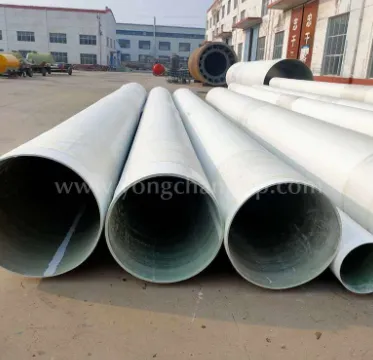
How FRP Pipe is Constructed?

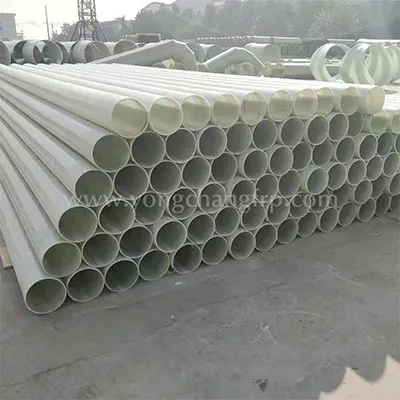
 FRP Pipes


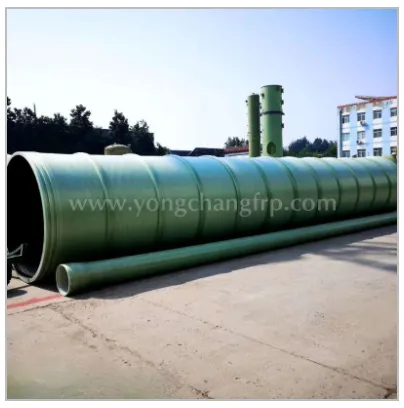
Three different processes are commonly used to fabricate fiber reinforced plastic pipe: centrifugal casting, filament winding, and hand lay-up. Filament winding and centrifugal casting are used to make pipe up to approximately 12 inches in diameter, with filament winding being the most common. Hand lay-up is generally used for larger diameter pipes, and for asymmetric shapes.


Centrifugal Casting

The centrifugal casting process involves layering glass cloth on the inside walls of a tubular mold which is rotated at high speed. Catalyzed liquid resin is then injected into the rotating mold. Centrifugal force ensures that the reinforcing fibers are thoroughly saturated with resin and serves to drive out air bubbles that might compromise the physical properties of the pipe. The mold continues to rotate while the resin cures.


Filament Winding

In filament winding, continuous fiberglass filaments, called rovings, are saturated with catalyzed liquid resin and helically wound around polished steel mandrels. Typically, the fibers are fed through a mechanical device that moves up and down the length of the rotating mandrels. The resin is then cured at elevated temperatures and the finished pipe is removed from the mandrel.

Filament winding results in the highest fiber-to-resin ratio of the three fabrication methods and consequently offers the highest strength-to-weight ratio. This is the method used by Waco Boom.
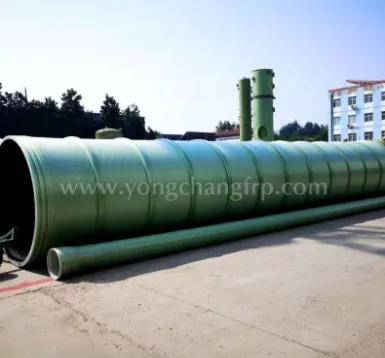
 

FRP Sand Pipe


Hand Lay-up

As the name suggests, hand lay-up is a manual fabrication process. It involves building up layers of chopped glass or woven glass mat impregnated with catalyzed resin around a suitable mold. Special metal rollers are used to improve glass wet-out and force out trapped air bubbles. Hand lay-up is generally used only for custom shapes or for large-diameter pipe where filament winding or centrifugal casting is not practical.


FRP Pipe Manufacturer & Supplier

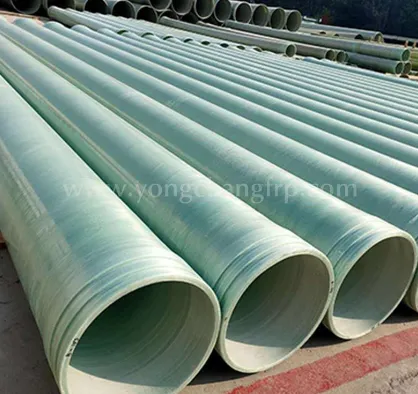
Our Yongchang glass fiber reinforced plastic / FRP pipes are designed and manufactured according to customer requirements, with various sizes and configurations. We can manufacture pipelines of any specification and pressure and can be made into composite pipelines such as PVC/FRP, PP/FRP, PVDF/FRP, etc., according to the conditions of use. If you are interested in our products, please contact us for more information.

2024年3月5日星期二

Why Do You Need The FRP Pipe?

FRP pipe, also called fiberglass reinforced pipe, is a light, high-strength, and corrosion-resistant non-metallic pipe. With its excellent chemical resistance, light weight, high strength, non-scaling, strong shock resistance, long service life compared with ordinary steel pipes and cast iron piping, low overall cost, fast installation, safe and reliable, it is accepted by users. The application fields of fiberglass reinforced pipe involve industries such as petroleum, chemical industry, and sample water.


What is FRP (GRP)?


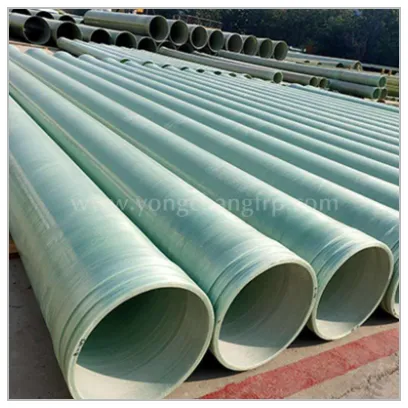
FRP Pipe


FRP, another name for GRP, is commonly known as glass reinforced plastic. It is a high performance material formed by mixing fiber material and base material in a certain ratio, which is light and hard, non-conductive, high mechanical strength, and corrosion resistant.


What are the characteristics of FRP Pipe?

► 1. The coefficient of development of products is comparable

The coefficient of thermal expansion of the FRP composite product resembles that of concrete. When the ambient temperature level changes, FRP and concrete work in harmony, and also no big temperature level anxiety will certainly be created between them.

► 2. High tensile stamina

The tensile stamina of FRP is considerably more than that of steel, and also the tensile toughness of high-strength steel wire has to do with the exact same, usually 2 to 10 times that of steel.

 3. Lightweight

FRP product is lightweight and also high toughness, so it can reduce the weight of the framework as well as assist in the construction. Its weight is normally 20% of steel. When it is utilized in a huge span structure, it can substantially lower the weight of the structure.


GRP/FRP Sand Pipe


 4. Manufacturing facility production, assembly, and also building

FRP is a fabricated product, which can be made with different toughness indexes, elastic modulus as well as unique efficiency requirements according to the job requirements, such as fiber material of various fiber materials and laying techniques. Factory manufacturing and also on-site installation contribute to making certain tasks top quality, boosting labor efficiency as well as understanding construction automation.

 5. Rust resistance

FRP material has great corrosion resistance and exhaustion resistance. It can be used in acid, antacids, chlorine salt as well as a moist environment for a long period of time. Thus, the life span of the structure can be boosted. This is hard to compare to the general structure products.

 6. Practical forming

The manufacturing procedure of FRP consists of pultrusion, winding, hand gluing, injection molding, and also various other techniques. It is not only possible to produce normal shaped FRP products widespread, but likewise to generate nearly approximate designed sheets for creating non-linear structure forms.


We are an FRP pipe supplier, please feel free to contact us if you need them.

2024年2月6日星期二

What Are The Benefits Of Using FRP Pipes?

What Are The Benefits Of Using FRP Pipes?

Fiberglass reinforced plastic (FRP) pipes are used in various industrial product applications, including the handling of materials in corrosive environments and also the transfer of corrosive products and materials. However, the fastest growing application of FRP systems is for industrial equipment. The applications of FRP pipes range from handling flammable liquids in retail facilities to water and sewage pipes in industrial and municipal markets.


Advantages of FRP pipes


1. Corrosion resistance

FRP pipe has corrosion resistance. In most cases, Fiberglass reinforced plastics are the only material that can handle some service environments. In addition, their corrosion resistance is often combined with their cost advantage, making it the most acceptable solution. The corrosion resistance of the Fiberglass reinforced plastic pipe is a function of the total resin content and the resin used in the laminated pipe. Therefore, the higher the resin content, the stronger the corrosion resistance.


2. Weight advantage

FRP pipe has a lower weight-to-strength ratio, which is another significant advantage of FRP pipe. In the case of the same strength, the weight of Fiberglass reinforced plastic pipe is about half that of aluminum and one-seventh of stainless steel.

When considering the convenience and cost of piping system installation, lightweight performance is particularly important. When equipment is installed on existing structures such as roofs or mezzanine, the inherent lightness of FRP pipes is a major advantage.

The high strength of FRP pipe plays an important role in the design of various FRP equipment and applications such as pultruded profiles. In addition, the high strength and light weight of FRP pipe make it suitable for filament wound pipes and pipes. Contact us about our products.


3. Economy

Low cost is a major advantage of using FRP pipes because they provide an effective corrosion solution at the lowest cost when compared to materials such as titanium, rubber lining and stainless steel. However, the cost advantage of this material mainly depends on design considerations, applications, pressures involved, availability, raw material costs, and product configuration.


FRP Pipes

FRP pipe


4. Flexibility

FRP pipes have a wide range of uses and are often overlooked in their applications. However, it is important to note that the things you can do with Fiberglass reinforced plastic pipes cannot be done efficiently and economically with other ready available materials. FRP pipes can be used to shape any piece of equipment or configuration for which permanent or temporary molds can be constructed. For example, the work of FRP pipes is very easy, because you can manufacture all types of T-shaped inlets, rectangular transitions, round transitions, elbows and flanges with minimal cost. Fiberglass reinforced plastic pipes can also be used in new and existing structures.

We are FRP pipe suppliers. Please feel free to contact us if you are interested in our products.

2024年1月17日星期三

FRP: Manufacturing and Advantages

 FRP pipes

GRP/FRP Sand Pipe


FRP is a very beneficial building material. Many industries turn to FRP products once they realize the long-term financial savings.


How is FRP made?


FRP is a composite material that consists of a thermosetting resin matrix reinforced with fibers. In the early days of FRP, there were even some reinforcements made from paper, asbestos or wood. This is now obsolete due to its poor durability compared to carbon and glass.

Today, FRP can be purchased in a variety of compositions with different resins and fibers. The greater the amount of fibers, the stronger the FRP. Depending on the application, there are many different types of resins used to make FRP. These plastic resins can include:

• Polyurethanes

• Epoxy resins

• Polyester fibers

• Phenolic formaldehyde

• Vinyl esters


What are the advantages of FRP? 


Advantages of FRP features

• The fiber reinforcement adds elasticity and strength to a tough but still relatively fragile substrate. This allows it to be turned into a variety of complex structural shapes and platforms or sheets for a variety of applications.

• Fiber-reinforced plastics are incredibly strong and exceptionally durable. And they are super resistant to impact and denting.

• They can also handle climates and environments of the harshest nature, especially corrosive environments such as oil rigs.

• It can be as strong as steel at a fraction of its weight.


FRP pipes

GRP/FRP Sand Pipe


Advantages of FRP structure

• FRP products offer the same strength but also improved flexibility, durability, and resilience.

• Because of the strength of fiber-reinforced plastic relative to other materials, ordinary polymers, thermoplastics, and other materials, and even metals such as aluminum and steel, cannot match it.

• It is a fraction of the weight of its traditional counterparts.

• Its elasticity and strength can even be scaled to suit your needs. This makes FRP a highly adaptable material that can be easily used in many different applications in many industries.

• Shapes can be either contoured or rounded and can be provided with tight tolerances and uniform thicknesses. FRP can be manufactured into vastly complex designs using several combinations of geometric shapes.

• The thickness of the material can be adjusted from as little as 1/16" to 1/2" if desired.


We are an FRP pipe supplier, please feel free to contact us if you need them.

2023年12月11日星期一

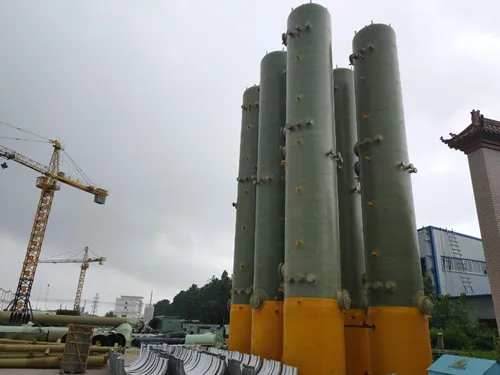
Know about FRP Biogas Desulfurization Tower

 GRP/FRP Biogas Desulfurization Scrubber


Large and medium-sized biogas engineering technology is an energy engineering technology aimed at the development and utilization of organic wastes such as farm manure and kitchen waste, aiming at obtaining energy and controlling environmental pollution, and realizing a virtuous cycle of agricultural ecology. It mainly reduces the organic matter content of fecal water and waste through anaerobic fermentation and related treatment, Meet or approach the discharge standard and obtain biogas according to the technical design process requirements of the main body of anaerobic fermentation and supporting projects.

Biogas contains hydrogen sulfide gas, which must be desulfurized before combustion. In this biogas purification project, biogas treatment process steps: FRP aeration tank > FRP biogas desulfurization tower > FRP biogas washing tower。

Desulfurization process of desulfurization tower: the biogas from anaerobic biogas digester enters the desulfurization system after preliminary dehydration. Hydrogen sulfide gas contacts with desulfurizer and is removed from biogas due to redox reaction. The desulfurization system can provide the best temperature and water gas content for the desulfurization reaction. The loading process of desulfurizer can also provide the best air flow channel and effective contact area of gas-solid reaction for the desulfurization process, which can greatly improve the utilization efficiency of desulfurizer and the purification degree of biogas.


Dehydration, impurity removal and buffer process

The pressurized biogas enters the buffer tank to realize the effective separation of gas, liquid and solid. At the same time, the gas pressure stabilization treatment is carried out to meet the stable gas supply to the generator set and ensure the safe and efficient operation of the generator set. The separated water and particles settle to the bottom of the buffer tank through the action of gravity, and the impurity gas partially dissolved in the water is discharged from the bottom of the buffer tank with the water. The purified gas comes out from the top.

2023年11月7日星期二

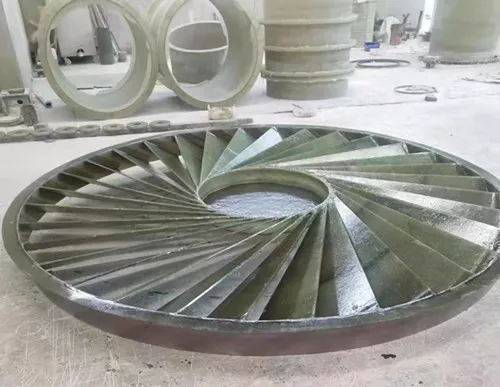
FRP Swirl Plate Product Introduction

 FRP swirl plate


Hebei Yongchang Composite Material Technology Co., Ltd. production of FRP swirl plate is usually installed in the swirl tower, when working, dusty flue gas rises from the bottom of the tower, due to the guiding effect of the swirl plate blade and the flue gas rotates up. So that the liquid flowing up and down the tower is sprayed into mist droplets, and there is a large contact area between the gas and liquid, the droplets are driven by the air flow to rotate, the centrifugal force generated strengthens the contact between the gas and liquid, thrown to the tower wall along the wall and down to the next layer of the tower. And then atomized by the air flow and the gas-liquid contact. Therefore, the FRP swirl plate plays a role in gas-liquid reaction and dust removal and fog removal in the tower, and whether its design is reasonable will affect the dust removal absorption effect, and it also plays a good dehydration role. Hebei Yongchang Composite Material Technology Co., Ltd. adopts special FRP swirl plate design program software, which plays an important role in its selection.

Second, the structure of the FRP swirl plate The FRP swirl plate is composed of a swirling blade, a cover cylinder, a collection tank, a special-shaped nozzle, and a circular overflow tube. Swirl plates can be divided into two types: inward and outward.

Third, the performance characteristics of the FRP swirl plate

1. FRP swirl plate is installed in the dust removal and desulfurization tower, the dust removal and desulfurization efficiency is high.

2. The resistance of dust removal and desulfurization is small, and the resistance is 800~1200Pa.

3. Low water quality requirements, dust removal and desulfurization water can be recycled, achieve high desulfurization efficiency, low operating costs;

4. Strong corrosion resistance, can be used for a long time in high temperature, strong acid, strong alkali, etc. and kinds of environment.

5. High dewatering efficiency, induced draft fan without water.

6. Easy maintenance, easy to install and disassemble the swirl plate; There are manholes at the top of the tower and above each layer of swirl plates, and auxiliary facilities such as maintenance platforms and ladders can be set up to facilitate daily maintenance.

7. Good processing effect, low operating cost, simple operation and reliable.

8. Resin adds high-strength wear-resistant acid and alkali-resistant silicon carbide material.

Fourth, the field of use OF THE FRP swirl plate is installed in a variety of absorption towers, scrubber towers and purification towers, is an important part of the tower for gas-liquid exchange and gas-water separation, desulfurization and fog removal.

2023年10月20日星期五

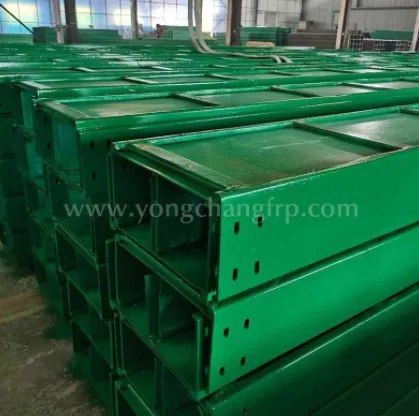
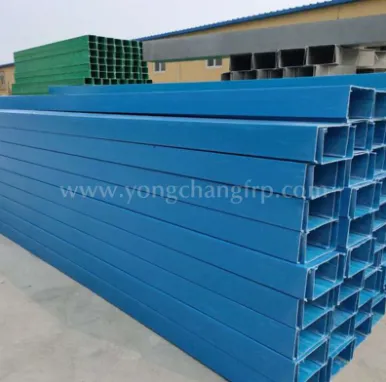
What Is the Difference Between Cable Ladders And Cable Trays?

  Glass Fiber Reinforced Plastic Composite Cable Tray


With a range of support solutions available, it might be difficult to know which option is best suited for your application. When it comes to cable ladders and cable trays there are a few fundamental distinctions that should make your choice easier. Read this short guide to find the right fit.

Generally, cable ladders are preferred for supporting high volume or heavy cabling, especially if there are long spans between supports.

Cable trays are typically used for light weight cable support, in addition to instrumentation and tubing.


Cable ladder

Other common names: ladder tray, cable runway

  • Simple design consisting of side rails with rungs connected. The rungs are perforated, which makes it easy to fasten cable ties or cable cleats directly onto the ladder.
  • Suited for electrical, instrumentation and telecommunications cables.
  • Can support heavy cables, cable bundles and pipes at long support spans.
  • Cables can enter and exit anywhere along the span.
  • Ladders provide free air flow, which is essential to avoid overheating of cables.
  • Minimal accumulation of water, moisture or dust.
  • Cables are exposed and easily accessible – making inspection and future modifications uncomplicated.
  • Covers can be added to protect cabling against UV, snow/ice and vandalism.
  • Oglaend System’s fittings such as elbows, tee pieces, cross pieces and risers make it easy to change direction or level of the cable ladder span. These solutions require minimal space.
  • Cable ladders are typically supplied in 3 or 6-meter lengths.


Cable tray


FRP/GRP Cable Trays


Other common names: trough, ventilated cable tray

  • Consists of a single sheet of metal. Many cable trays have slot patterns, which makes it easy to position equipment and fasten cable ties and other fixings, such as tubing clamps.
  • Suited for light electrical and instrumentation cables and tubing.
  • The bottom coverage helps reduce electromagnetic interference, while the perforations enable water drainage and ventilation.
  • Trays provide additional support and prevents cables from drooping, which could potentially damage the circuit’s performance.
  • Cable trays are the most aesthetically pleasing option. In buildings with no panelled ceiling, cable trays can be a great option for hiding cables whilst keeping them organised.  
  • Covers can be added to protect cabling against UV, snow/ice and vandalism.
  • Cable trays are typically supplied in 3-meter lengths.


We’ll help you find a solution that suits your needs!

In most cases cable ladders are the preferred choice, however; cable trays are better suited when aesthetics and radio/electromagnetic interference are important considerations. Cable trays are also useful for protecting sensitive cabling and tubing. 

Yongchang is happy to answer any questions you might have about our cable trays.

Why Chemical Plants Are Switching from Steel to FRP Storage Tanks

Why Chemical Plants Are Switching from Steel to FRP Storage Tanks Introduction Chemical plants have relied on steel storage tanks for dec...