2023年11月7日星期二

FRP Swirl Plate Product Introduction

 FRP swirl plate


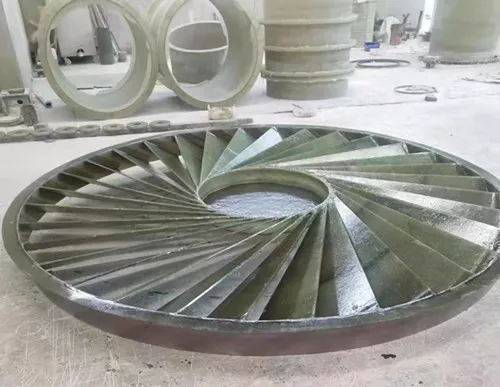
Hebei Yongchang Composite Material Technology Co., Ltd. production of FRP swirl plate is usually installed in the swirl tower, when working, dusty flue gas rises from the bottom of the tower, due to the guiding effect of the swirl plate blade and the flue gas rotates up. So that the liquid flowing up and down the tower is sprayed into mist droplets, and there is a large contact area between the gas and liquid, the droplets are driven by the air flow to rotate, the centrifugal force generated strengthens the contact between the gas and liquid, thrown to the tower wall along the wall and down to the next layer of the tower. And then atomized by the air flow and the gas-liquid contact. Therefore, the FRP swirl plate plays a role in gas-liquid reaction and dust removal and fog removal in the tower, and whether its design is reasonable will affect the dust removal absorption effect, and it also plays a good dehydration role. Hebei Yongchang Composite Material Technology Co., Ltd. adopts special FRP swirl plate design program software, which plays an important role in its selection.

Second, the structure of the FRP swirl plate The FRP swirl plate is composed of a swirling blade, a cover cylinder, a collection tank, a special-shaped nozzle, and a circular overflow tube. Swirl plates can be divided into two types: inward and outward.

Third, the performance characteristics of the FRP swirl plate

1. FRP swirl plate is installed in the dust removal and desulfurization tower, the dust removal and desulfurization efficiency is high.

2. The resistance of dust removal and desulfurization is small, and the resistance is 800~1200Pa.

3. Low water quality requirements, dust removal and desulfurization water can be recycled, achieve high desulfurization efficiency, low operating costs;

4. Strong corrosion resistance, can be used for a long time in high temperature, strong acid, strong alkali, etc. and kinds of environment.

5. High dewatering efficiency, induced draft fan without water.

6. Easy maintenance, easy to install and disassemble the swirl plate; There are manholes at the top of the tower and above each layer of swirl plates, and auxiliary facilities such as maintenance platforms and ladders can be set up to facilitate daily maintenance.

7. Good processing effect, low operating cost, simple operation and reliable.

8. Resin adds high-strength wear-resistant acid and alkali-resistant silicon carbide material.

Fourth, the field of use OF THE FRP swirl plate is installed in a variety of absorption towers, scrubber towers and purification towers, is an important part of the tower for gas-liquid exchange and gas-water separation, desulfurization and fog removal.

2023年10月20日星期五

What Is the Difference Between Cable Ladders And Cable Trays?

  Glass Fiber Reinforced Plastic Composite Cable Tray


With a range of support solutions available, it might be difficult to know which option is best suited for your application. When it comes to cable ladders and cable trays there are a few fundamental distinctions that should make your choice easier. Read this short guide to find the right fit.

Generally, cable ladders are preferred for supporting high volume or heavy cabling, especially if there are long spans between supports.

Cable trays are typically used for light weight cable support, in addition to instrumentation and tubing.


Cable ladder

Other common names: ladder tray, cable runway

  • Simple design consisting of side rails with rungs connected. The rungs are perforated, which makes it easy to fasten cable ties or cable cleats directly onto the ladder.
  • Suited for electrical, instrumentation and telecommunications cables.
  • Can support heavy cables, cable bundles and pipes at long support spans.
  • Cables can enter and exit anywhere along the span.
  • Ladders provide free air flow, which is essential to avoid overheating of cables.
  • Minimal accumulation of water, moisture or dust.
  • Cables are exposed and easily accessible – making inspection and future modifications uncomplicated.
  • Covers can be added to protect cabling against UV, snow/ice and vandalism.
  • Oglaend System’s fittings such as elbows, tee pieces, cross pieces and risers make it easy to change direction or level of the cable ladder span. These solutions require minimal space.
  • Cable ladders are typically supplied in 3 or 6-meter lengths.


Cable tray


FRP/GRP Cable Trays


Other common names: trough, ventilated cable tray

  • Consists of a single sheet of metal. Many cable trays have slot patterns, which makes it easy to position equipment and fasten cable ties and other fixings, such as tubing clamps.
  • Suited for light electrical and instrumentation cables and tubing.
  • The bottom coverage helps reduce electromagnetic interference, while the perforations enable water drainage and ventilation.
  • Trays provide additional support and prevents cables from drooping, which could potentially damage the circuit’s performance.
  • Cable trays are the most aesthetically pleasing option. In buildings with no panelled ceiling, cable trays can be a great option for hiding cables whilst keeping them organised.  
  • Covers can be added to protect cabling against UV, snow/ice and vandalism.
  • Cable trays are typically supplied in 3-meter lengths.


We’ll help you find a solution that suits your needs!

In most cases cable ladders are the preferred choice, however; cable trays are better suited when aesthetics and radio/electromagnetic interference are important considerations. Cable trays are also useful for protecting sensitive cabling and tubing. 

Yongchang is happy to answer any questions you might have about our cable trays.

2023年9月11日星期一

What is a Perforated Cable Tray?

 Polymer Cable Tray


Any construction of a building has to include 3 huge designing accomplishments. It incorporates electrical, mechanical and civil works. When executing wiring inside the structure premises, there are a few perspectives which are to be thought of. One of the significant fundamental just as vital segments of any structure related electrical wiring is link the executives. Directing flawlessness of electrical wires is very urgent for legitimate working. Consequently, certain items are to be utilized to empower a safe climate for the two individuals and wires. One significant material which guarantees more prominent structure wellbeing is Perforated Type Cable Trays.


Classic Perforated cable trays are used for instrumentation, Control as well as Power Cables. Perforated Cable Trays provide excellent ventilation, it enhances life of cables and it can be fixed to any structure. The NEC says a cable tray system is a unit or assembly of units or sections and associated fittings forming a structural system used to securely fasten or support cables and raceways. That said, raceways generally mount on a wall in a room where power and communications cables are terminated.


Cable Tray - Perforated Type are ideal to install large volumes of Heavy duty power cables. Perforation makes full free air rating of cable ,Higher current flow can be achieved at the same cross section , Overheating and consecutive damaging of cable is avoided ,coupler holes inside guarantees easy connecting of cable trays to each other.


A cable tray system upholds and secures both force and signal cables and works with updating, growing, reconfiguring, or moving networks.


The majority of the cable tray systems are open, permitting proficient warmth scattering and simple access for substitution and fixes. Although commonly suspended from roofs or appended to dividers, some cable tray systems are reasonable for underfloor use.


Perforated cable tray consists of a ventilated base with side rails. It offers more help to links than the stepping stool type, Solid-bottom Cable Tray. Solid-bottom Cable Tray for fiber-optic link establishments where hanging of cables might influence framework execution, strong base (non-ventilated) cables trays are liked.


Polymer Cable Tray


In any case, the fundamental justification for choosing a strong base plate is a worry for electromagnetic/radio-recurrence impedance security.


Uses of Perforated Cable Trays

Perforated cable trays are parts of support techniques for force and information cables and wires. A perforated cable tray custom supports and jams both force and sign links and assists with overhauling, expanding, reconfiguring, or moving channels. Perforated cable tray techniques are open, permitting compelling warmth circulation and simple way for substitution and fixes. Although regularly suspended from rooftops or appended to dividers, punctured link plate strategies are good for underfloor use.


Features of Perforated Cable Trays

Solid construction for conveying a wide range of cables.

Perforated cable trays have openings on base to give sufficient ventilation and position to link lines.

Hostile to consumption, fire, dampness because of the pre-aroused, hot-plunged powder covered, epoxy covered completion.

Phenomenal warmth scattering.

Protected and smooth edge shields cable lines without any preparation.

Sufficiently able to withstand short circuits.

Accessible in all sizes.

Adaptable, simple and fast establishment.

Extraordinary development configuration permits cable trays to go anywhere.

Accessible in different assistants to fix and introduce.

Simple to keep up with.

Long life expectancy.


Benefits of Perforated Cable Trays

Less expensive: One of the huge advantages of utilizing a perforated cable tray is that it costs significantly not exactly different frameworks of guarding wiring on the stock floor.

Backing: Perforated Cable Tray is promptly apparent for help checks, developing of cables is simple since wires can enter or leave the Perforated Cable Tray anytime of the activity.

Security: Regular housework is significant for security, as Perforated Cable Tray is frequently settled in difficult to move places.


Specifications of Perforated Cable Trays

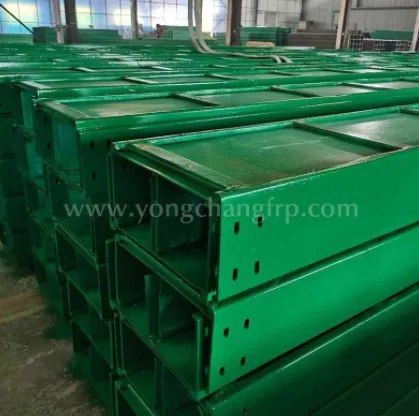
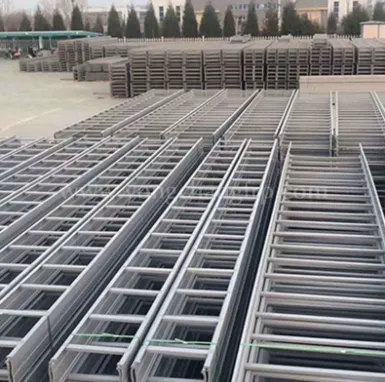
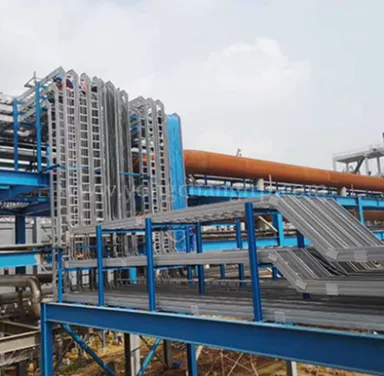
The length of FRP Bridge can be customized according to customer requirements.

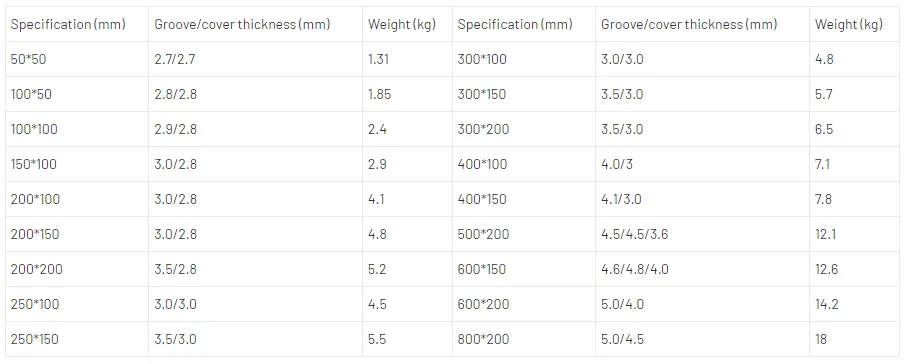
Common specifications, thickness and reference weight of perforated/trough fiberglass cable tray channel system.


What is a Perforated Cable Tray?

2023年8月9日星期三

Wiring System Design: Cable Tray VS. Conduit

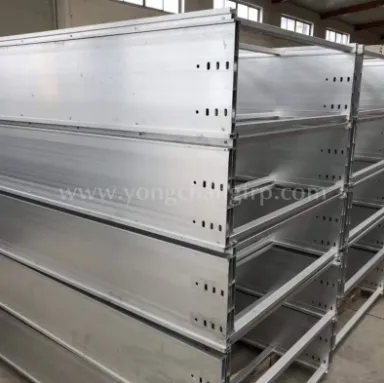
 Hot Dipped Galvanized Cable Tray


To be useful, electrical wiring must get from one place to another. Distribution is a necessary phase of system wiring design in order to get power or impulse signals to their final destinations.

Historically, wires and cables have been pulled through conduit. Plant environments are characterized by patterns of plentiful parallel conduit runs. Conduit continues to be the mainstay of electrical power distribution.

However, cable trays are making inroads into industrial plants. In Canada, about 85% of industrial plants use cable trays instead of conduit. That figure is somewhat smaller in the U.S., accounting for less than 50% of industrial plants using cable trays. But the trend in the U.S. is moving toward cable tray use. To date, the U.S. data and communication cable market has readily accepted wire cable tray, while power system engineers and contractors are yet to fully embrace this trend. Wire cable tray is still a relative newcomer to the electrical power segment of the market.


Cable tray

According to the National Electrical Code, a cable tray system is “a unit or assembly of units or sections and associated fittings forming a rigid structural system used to securely fasten or support cables and raceways.”

Cable tray advantages include wiring system design flexibility, simplicity, and lower installation cost. In plants where equipment is added, taken away, or is moved, cable trays provide a flexible advantage. Cable trays can typically adapt to complex configurations with a simple set of tools. The cost of material procurement for cable tray systems is not necessarily lower than that of conduit systems in all cases. However, compared to labor cost of conduit installation, cable trays present significant savings.


There are six basic cable tray types:

• Ladder — provides solid side rail protection, system strength, smooth radius fittings, and a wide selection of materials and finishes. Ladder cable tray is generally used in applications with intermediate to long support spans

• Solid bottom — provides nonventilated continuous support for delicate cables with added cable protection available in metallic and fiberglass. Also available are solid bottom metallic trays with solid metal covers for nonplenum-rated cable in environmental air areas. Solid Bottom cable tray is generally used for minimal heat-generating electrical or telecommunication applications with short to intermediate support spans.

• Trough — provides moderate ventilation and added cable support frequency, with the bottom configuration providing cable support every 4 in. Available in metal and nonmetallic materials, trough cable tray is generally used for moderate heat generating applications with short to intermediate support spans.

• Channel — provides an economical support for cable drops and branch cable runs from the backbone cable tray system. Channel cable tray is used for installations with limited numbers of tray cable when conduit is undesirable.

• Wire mesh — provides job site or field-adaptable support systems primarily for low-voltage wiring. Wire mesh tray generally is used for telecommunication and fiber optic applications. Wire mesh tray systems are typically zinc plated steel wire mesh.

• Single rail — provides the quickest system installation and the most freedom for cables to enter and exit the tray system. Typically, single-rail cable tray is used for low-voltage and power cable installations where maximum cable freedom, side fill, and installation speed are factors. These aluminum systems may be single-hung or wall-mounted systems in single or multiple tiers.


Cable tray configurations

Straight sections are available to route cables in a horizontal or vertical plane. Fittings route cables in various directions in either the horizontal or vertical planes. Typical fittings include elbows, tees, crosses, and risers. These fittings are available in various radii and bend angles.

Support methods include trapeze (single or multitier), hanger rod clamps, “J” hangers, center hung support, wall support, underfloor support, and pipe stanchions. Trapeze supports are recommended in applications where cables will be pulled through the cable tray. Center-hung supports typically are used when cables will be installed from the side of the cable tray. Also, center-hung supports are especially useful when future cable additions are necessary.

Wall and underfloor supports are useful when ceiling structure is not available or undesired. Outdoor installations are controlled by the structures available to support the cable tray.


Conduit

The primary benefit of conduit systems is the ability to ground and bond. Grounding and bonding play a significant role in minimizing electromagnetic interference (EMI). Steel conduit reduces electromagnetic fields by up to 95%, effectively shielding computers and sensitive electronic equipment from the electromagnetic interference (EMI) caused by power distribution systems.

Benefits of conduit include:

• Competitive life-cycle costs

• EMI shielding

• Physical protection of conductors

• Proven equipment grounding conductor

• Chemically compatible with concrete

• Coefficient of expansion compatible with common building materials

• Noncombustible

• Recyclable

• High tensile strength
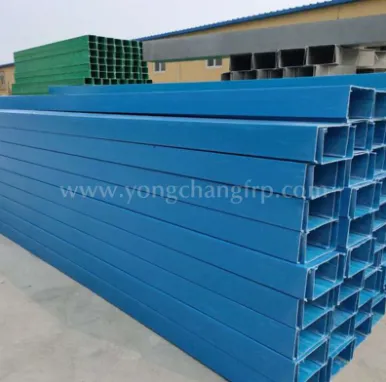
 

FRP/GRP Cable Trays


There are two primary reasons to use steel conduit. According to the Steel Tube Institute of North America, steel conduit is the best possible protection of your electrical conductor and wiring systems, and it facilitates the insertion and extraction of conductors and wiring. Steel conduit is used in more than 50% of U.S. manufacturing and other industrial facilities in a variety of indoor, outdoor, and underground applications, including those where corrosive and hazardous conditions exist.


The three basic types of steel conduit and their applications are:

• Rigid metal conduit (RMC) has the thickest wall, making it the heaviest steel conduit. Inside and outside are zinc-coated to provide corrosion resistance. RMC can be used indoors, outdoors, underground, and in concealed or exposed applications

• Intermediate metal conduit (IMC) has a thinner wall and weighs less than RMC. A zinc-based coating is used on the outside; an organic corrosion-resistant coating is used on the inside. IMC can be used for the same applications as galvanized rigid metal conduit

• Electrical metallic tubing (EMT) is the lightest weight steel conduit manufactured. EMT is made of galvanized steel and is unthreaded. It is joined by setscrew, indentation, or compression-type connectors and couplings. This joining method makes EMT easy to alter, reuse, or redirect. Even though EMT is made of lighter-walled steel, it provides substantial physical protection and can be used in most exposed locations except where severe physical damage is possible.

RMC, IMC, and EMT are permitted as an equipment grounding conductor in accordance with NEC 250.118. A supplementary equipment grounding conductor sized in accordance with NEC 250.122 may be added as well. If a supplementary equipment grounding conductor is used, it is still important to comply with NEC 300.10 and 300.12, since approximately 90-95% of the ground current flows on the conduit and not in a supplementary conductor.


Environmental considerations for conduit

The coefficient of expansion for steel conduit/EMT is 6.5×10⁻⁶in./in./deg F. This is significant as it relates to whether or not expansion fittings would be required in a particular application. Expansion fittings are installed where significant temperature differentials are anticipated. These temperature shifts cause materials to expand and contract and could result in the conduit being pulled apart at the joints. Expansion fittings are not normally required with steel conduit/tubing because their coefficient of expansion is similar to that of other common building materials. However, when steel conduit is installed on bridges, rooftops, or as an outdoor raceway span between buildings, expansion fittings may be required. In these types of installations, there is a probability that expansion and contraction would occur, resulting from the direct heat of the sun coupled with significant temperature drops at night.

Couplings that accommodate thermal expansion while maintaining grounding and bonding integrity are now available. Such a coupling uses an internal bonding jumper to maintain electrical continuity. An internal, keyed, sliding bushing allows conduit movement. Installation is simple, requiring no disassembly. These couplings are installed by sliding the fitting onto the moving conduit until it stops at the internal slide bushing, then tightening. The next step is to tighten the gland nut with a wrench to compress the packing, creating a weather-resistant seal around the moving conduit. The final step is to thread the next length of conduit (stationary) into the other end of the fitting.


How to choose cable trays?

When selecting cable trays, cable tray configurations, and support methods, seek the answers to the following questions:

Where will the cable trays be used?

Job site and installation considerations include:

Indoor

• Support locations available affect the length and strength of the system.

• Industrial installations may require a 200 lb concentrated load.

• Office installation may make system appearance, system weight, and space available important factors.

• Environmental air handling areas may affect cable types, cable tray material, or cable tray type, as well as the potential need for covers.

• Classified hazardous locations affect the acceptable cable types.

Outdoor

• Available supports affect length and strength requirements.

• Environmental requirements include loads, ice, wind, snow, and possibly seismic situations.

• Corrosion requirements affect materials and finishes.

• Classified hazardous locations affect acceptable cable types.

What types of cables will be supported, and how many?

• NEC cable fill requirements dictate size, width, and depth of cable tray.

• Cable support requirement may necessitate bottom type.

• Largest bending radius of cable controls fitting radius.

• Total cable weight determines load to support.

What are the future requirements of your system?

• Cable entry/exit freedom may change.

• Designing a partially full or an expandable system may produce big savings later.

• Support type should allow for expansion needs.

Conduit installation tip

• Conduit having factory-cut threads are supplied with corrosion protection applied.

• Field cut threads are required to be coated “with an approved electrically conductive, corrosion-resistant compound where corrosion protection is necessary,” according to NEC 2002 300.6 (A). Field-cut threads should be protected from corrosion if they will be installed in wet or outdoor locations. Protect the thread surface with conductive rust resistant coating such as zinc-rich paint. Other conductive coatings are appropriate as well.

• Field threads should be cut one thread short. This ensures a good connection and allows the entire thread surface to be inside the coupling.


Do you need Hot Dipped Galvanized Cable Tray price?
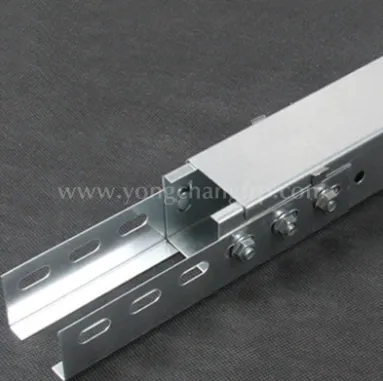
 

Hot Dipped Galvanized Cable Tray


Yong Chang takes honesty as the foundation, cherishes reputation, provides high-quality products, and provides the best after-sales service to repay customers. We sincerely welcome customers from all walks of life to visit our company and contact us with valuable suggestions to obtain ask for the price and parameters of hot-dip galvanized cable tray.
2023年7月24日星期一

What are the Types of Cable Trays?

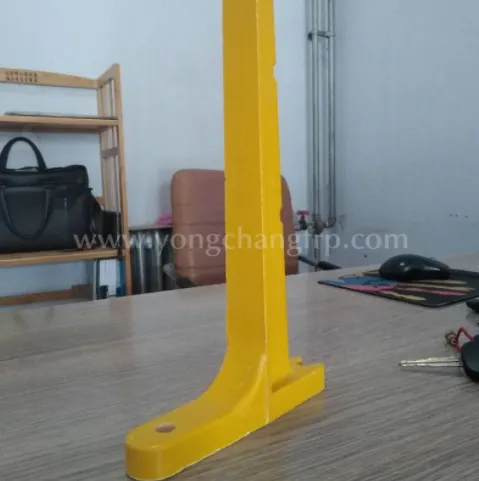
 GRP/FRP Cable Bracket


What are Cable Trays?


Cable trays are used for providing mechanical protection in an environment where large quantities of power control cables are at work. Besides providing mechanical protection, these cables are also designed to facilitate a perfect routing path for power or control cables. These cables could be both overhead and under-ground.

There are a variety of cable trays available in different materials. Cable tray manufacturers make cable trays with galvanized steel, aluminium, stainless steel and glass-fiber reinforced plastic. Making a decision about which cable tray to choose completely depends on the usage and installation environment. Here the installation environment refers to taking into account electrical considerations as well as corrosion. Besides, cost is also an important decisive factor to be taken into account while picking cable trays. Let’s take a look at various types of cable trays:


Types of Cable Trays


1. Steel Cable Trays

Cable tray manufacturers also recommended using steel cable trays. They are highly popular because of several qualities and benefits. Steel cable trays offer exceptionally high strength and are low cost also. The only downside to steel cable trays is their high weight and lesser corrosion resistance. Apart from these cons, these cable trays are really ideal to use in a variety of applications.

2. Aluminium Cable Trays

Cable trays manufactured with aluminium by cable tray manufacturers in India are known as aluminium cable trays. Typically, these cable trays can be used in almost any environment. They have a repute of having a good strength-to-weight ratio and commendable resistance to corrosion. That’s not it. These cable trays are easy to install and are also advantageous because of their light weight. According to fastener manufacturers in India, these cable trays are approximately 50 percent lighter than that of steel cable trays.

3. Stainless Steel Cable Trays

Stainless steel cable trays are also widely used across various industries. They are highly resistant to dyestuffs. Besides, great resistance to organic as well as inorganic chemicals in extremely high temperatures is the hallmark of stainless steel cable trays.

4. Solid Bottom Cable Trays

If you are using sensitive circuits, then solid bottom cable trays are the best pick. These cable trays contain a solid bottom part with a solid cover. For superior EMI or RFI protection, these cable trays must be used. All fastener manufacturers in India recommend the same.

5. Ladder Type Cable Trays

It might surprise you that 80 percent of the cable trays used in any industry is ladder type cable trays. Moisture doesn’t accumulate in this cable tray type.


Hebei Yongchang Composite Material Technology Co., Ltd. is a leading frp cable tray manufacturer in China, with strong technical force, first-class equipment and advanced technology. We main provide glass frp cable tray, steel cable tray, polymer composite cable tray. For any queries about any cable tray types, feel free to get in touch with us. Stay tuned!

2023年7月9日星期日

The Internal Structure of the FRP Storage Tank and Repair Method

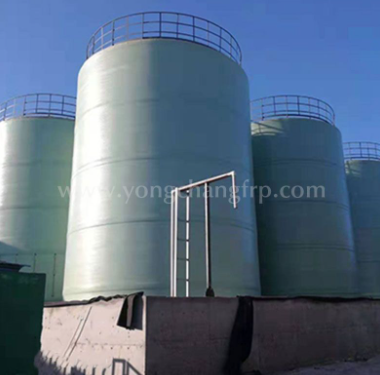
 FRP Storage Tank


Not many people know the internal structure of FRP storage tanks. FRP tank wall is divided into an internal layer, secondary internal layer, and external surface. Next, we introduce these internal structures.


FRP storage tank internal structure

1. FRP tank lining layer

FRP storage tank lining layer consists of the inner surface layer and secondary inner layer, the matrix should be used bisphenol A type unsaturated polyester resin, vinyl ester resin, and other resins with excellent corrosion resistance. Reinforcing materials are glass fiber surface felt, glass fiber short-cut raw silk felt and glass fiber untwisted roving cloth, etc.

2. FRP storage tank secondary inner layer

It is made of general-purpose unsaturated polyester resin as the matrix and glass fiber twist-free roving as the reinforcing material. Resin content is 45%-50%, the thickness of the layer is determined by the design calculation.

3. FRP storage tank outer surface layer

The unsaturated polyester resin with excellent weather resistance is used as the matrix, and the glass fiber surface mat or glass fiber untwisted roving cloth (thickness less than 0.16mm) is used as the reinforcing material, with resin content more than 55%, and the thickness of the layer is 0.2-0.5mm.


Repair of FRP storage tank

Although the FRP performance is superior, in terms of hardness, corrosion prevention is good, but also for one reason or another, resulting in FRP storage tank leakage, and FRP damage, in most cases to replace the main, repair is very difficult, usually with the gluing method or hot welding method to restore it, here is a brief introduction to the gluing method of repair.

(1) cleaning FRP storage tank. First of all, the damaged tank will be disassembled first, clean and dry it, and do the prerequisite work of repair.

(2) according to the size of the broken part cut appropriate large glass fiber cloth, after baking wax removal, heating until not smoking, take care not to fold.

(3) Glue preparation. There are many kinds of glue formulations, but in general, the epoxy resin and polyamide resin two kinds of resin in the ratio of 1:1 into a wide mouth container, stirring with a stick, the viscosity is generally good to lift the stick does not pull the wire, pay attention to the principle of rather less than more, not too much at a time, to just enough to use up as good, followed by uneven mixing, with a good glue after a period of time will be Self-curing, resulting in waste.

(4) Apply glue. First, use a stiff brush to brush a layer of glue in the inner surface of the glass fiber reinforced plastic tank, and then the prepared glass cloth on the surface of the glue, gently pat the pressure to make it fit tightly so that the glue penetrate the glass cloth; the first layer of good penetration and then coated with a second layer of glue, paste the second layer of glass cloth. So the cycle coated a few layers on it, take care not to get too thick in the coating and framing.

(5) Curing. After painting a higher temperature place to let its natural curing, although it takes a longer time, but definitely not with open fire baking. Wait for its natural curing, and then polish the edges, openings, after spraying, the repair is complete, the glass fiber reinforced plastic tank and restore the strong and durable.


We are an FRP storage tank supplier, please feel free to contact us if you need them!

2023年6月24日星期六

FRP Pipes: The Best Choice For Water And Wastewater Treatment

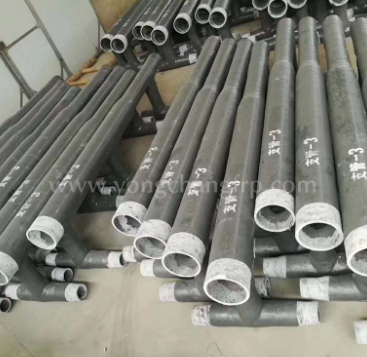
 FRP Pipes


With the aging facilities, federal governments and also districts across the globe face a big task of changing the pipe facilities with the ideal materials providing a life span most likely going beyond 100 years. And also FRP pipes are our finest option to change standard sewage therapy pipes.


Why do we require FRP pipes?


What veins and also arteries are to our body, are water and wastewater pipelines to infrastructure. Think of spending a day without water. From bringing potable to our home to dealing with household and commercial wastewater successfully, these pipes do tasks quintessential to using a hassle-free income.

Over the past 100 years, global water usage has actually increased by an element of 6. With the constant increase in populace, financial advancement, and moving usage patterns, global water usage is growing at a steady rate of 1% annually.

The most usual materials for the manufacture of water and also wastewater pipes are metal (cast iron, ductile iron, steel, and copper), clay and also concrete pipe (glazed clay, strengthened concrete, as well as asbestos concrete), and plastics (PVCs, HDPE, as well as fiberglass).

The most usual pipeline size for water mains varies from 6 to 16 inches. Branch lines giving service to residences, workplaces, and structures vary from 0.5 to 6 inches. Sewers, which lug wastewater and also stormwater have diameters surpassing that of water mains.

For a long, metals as well as concrete have dominated water as well as wastewater applications.


Application of FRP pipes


Picking the right kind of pipe product and also dimension is of critical relevance and also depends upon numerous variables including yet not limited to the application, water pressure, running temperature level, as well as nature of fluid going through the pipe.

While FRP pipes have been in usage for a long, they have actually located a bigger acceptance not long ago, and also have emerged as one of the most popular alternatives to conventional pipelines, such as steel, concrete, and also plastics, in water/wastewater applications.

FRP Piping is majorly made by the filament winding procedure. The filament winding procedure makes use of constant glass hair roaming impregnated with polyester material which is helically wound on a rotating mandrel at a specified winding angle. The roving is wound constantly in bi-directional layers up until the wanted wall surface thickness is accomplished.

While FRP pipes are primarily manufactured utilizing polyester material strengthened with glass fibers, a smaller portion of them additionally utilizes plastic ester and also epoxy depending upon the application demands.

Water/wastewater is a price-sensitive application as well as demands products at a competitive price. Polyester resin has the most affordable expense amongst thermoset materials consisting of plastic ester and also epoxy as well as uses superb chemical as well as corrosion resistance and also moderate mechanical, physical, and also thermal properties.


What makes FRP pipes ideal for water and wastewater applications?


Corrosion Resistance: FRP is an inert product offering excellent rust resistance, high chemical resistance, and also high weathering resistance.

Light Weight: FRP pipelines are extremely lightweight and also have an excellent strength-to-weight proportion. They consider 1/10 of concrete, 1/5 of steel, and also 1/8 of cast-iron pipes.

Longer Life Span: FRP pipes use a longer life span and also toughness with a much-reduced life cycle expense contrasted to steel, iron, and also concrete pipes.

Low Thermal & Electric Conductivity: FRP pipes have outstanding thermal protecting residential or commercial properties and do not need insulation. Besides water/wastewater, FRP pipes are likewise commonly utilized in chemical & industrial, oil & gas, and also marine & overseas applications.

Easy Installation: Being lighter than steel and also concrete, FRP pipelines use a faster setup and need lower installation in addition to upkeep expenses.


We are an FRP pipes supplier, please do not hesitate to contact us if you need them.

How to Choose the Right GRP Pipe Fittings for Aggressive Chemical Lines

How to Choose the Right GRP Pipe Fittings for Aggressive Chemical Lines Choosing the right GRP pipe fittings for aggressive chemical lines...