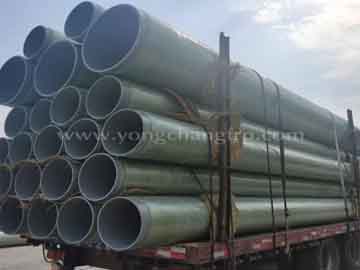
2023年8月9日星期三

Wiring System Design: Cable Tray VS. Conduit

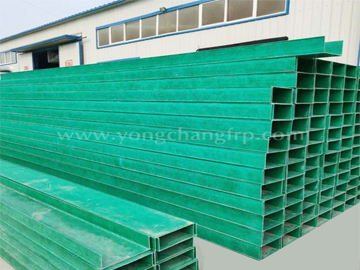
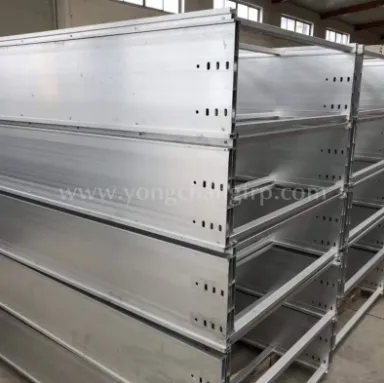
 Hot Dipped Galvanized Cable Tray


To be useful, electrical wiring must get from one place to another. Distribution is a necessary phase of system wiring design in order to get power or impulse signals to their final destinations.

Historically, wires and cables have been pulled through conduit. Plant environments are characterized by patterns of plentiful parallel conduit runs. Conduit continues to be the mainstay of electrical power distribution.

However, cable trays are making inroads into industrial plants. In Canada, about 85% of industrial plants use cable trays instead of conduit. That figure is somewhat smaller in the U.S., accounting for less than 50% of industrial plants using cable trays. But the trend in the U.S. is moving toward cable tray use. To date, the U.S. data and communication cable market has readily accepted wire cable tray, while power system engineers and contractors are yet to fully embrace this trend. Wire cable tray is still a relative newcomer to the electrical power segment of the market.


Cable tray

According to the National Electrical Code, a cable tray system is “a unit or assembly of units or sections and associated fittings forming a rigid structural system used to securely fasten or support cables and raceways.”

Cable tray advantages include wiring system design flexibility, simplicity, and lower installation cost. In plants where equipment is added, taken away, or is moved, cable trays provide a flexible advantage. Cable trays can typically adapt to complex configurations with a simple set of tools. The cost of material procurement for cable tray systems is not necessarily lower than that of conduit systems in all cases. However, compared to labor cost of conduit installation, cable trays present significant savings.


There are six basic cable tray types:

• Ladder — provides solid side rail protection, system strength, smooth radius fittings, and a wide selection of materials and finishes. Ladder cable tray is generally used in applications with intermediate to long support spans

• Solid bottom — provides nonventilated continuous support for delicate cables with added cable protection available in metallic and fiberglass. Also available are solid bottom metallic trays with solid metal covers for nonplenum-rated cable in environmental air areas. Solid Bottom cable tray is generally used for minimal heat-generating electrical or telecommunication applications with short to intermediate support spans.

• Trough — provides moderate ventilation and added cable support frequency, with the bottom configuration providing cable support every 4 in. Available in metal and nonmetallic materials, trough cable tray is generally used for moderate heat generating applications with short to intermediate support spans.

• Channel — provides an economical support for cable drops and branch cable runs from the backbone cable tray system. Channel cable tray is used for installations with limited numbers of tray cable when conduit is undesirable.

• Wire mesh — provides job site or field-adaptable support systems primarily for low-voltage wiring. Wire mesh tray generally is used for telecommunication and fiber optic applications. Wire mesh tray systems are typically zinc plated steel wire mesh.

• Single rail — provides the quickest system installation and the most freedom for cables to enter and exit the tray system. Typically, single-rail cable tray is used for low-voltage and power cable installations where maximum cable freedom, side fill, and installation speed are factors. These aluminum systems may be single-hung or wall-mounted systems in single or multiple tiers.


Cable tray configurations

Straight sections are available to route cables in a horizontal or vertical plane. Fittings route cables in various directions in either the horizontal or vertical planes. Typical fittings include elbows, tees, crosses, and risers. These fittings are available in various radii and bend angles.

Support methods include trapeze (single or multitier), hanger rod clamps, “J” hangers, center hung support, wall support, underfloor support, and pipe stanchions. Trapeze supports are recommended in applications where cables will be pulled through the cable tray. Center-hung supports typically are used when cables will be installed from the side of the cable tray. Also, center-hung supports are especially useful when future cable additions are necessary.

Wall and underfloor supports are useful when ceiling structure is not available or undesired. Outdoor installations are controlled by the structures available to support the cable tray.


Conduit

The primary benefit of conduit systems is the ability to ground and bond. Grounding and bonding play a significant role in minimizing electromagnetic interference (EMI). Steel conduit reduces electromagnetic fields by up to 95%, effectively shielding computers and sensitive electronic equipment from the electromagnetic interference (EMI) caused by power distribution systems.

Benefits of conduit include:

• Competitive life-cycle costs

• EMI shielding

• Physical protection of conductors

• Proven equipment grounding conductor

• Chemically compatible with concrete

• Coefficient of expansion compatible with common building materials

• Noncombustible

• Recyclable

• High tensile strength
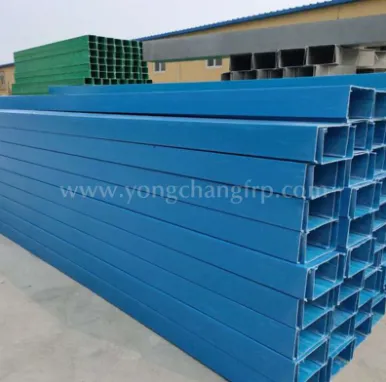
 

FRP/GRP Cable Trays


There are two primary reasons to use steel conduit. According to the Steel Tube Institute of North America, steel conduit is the best possible protection of your electrical conductor and wiring systems, and it facilitates the insertion and extraction of conductors and wiring. Steel conduit is used in more than 50% of U.S. manufacturing and other industrial facilities in a variety of indoor, outdoor, and underground applications, including those where corrosive and hazardous conditions exist.


The three basic types of steel conduit and their applications are:

• Rigid metal conduit (RMC) has the thickest wall, making it the heaviest steel conduit. Inside and outside are zinc-coated to provide corrosion resistance. RMC can be used indoors, outdoors, underground, and in concealed or exposed applications

• Intermediate metal conduit (IMC) has a thinner wall and weighs less than RMC. A zinc-based coating is used on the outside; an organic corrosion-resistant coating is used on the inside. IMC can be used for the same applications as galvanized rigid metal conduit

• Electrical metallic tubing (EMT) is the lightest weight steel conduit manufactured. EMT is made of galvanized steel and is unthreaded. It is joined by setscrew, indentation, or compression-type connectors and couplings. This joining method makes EMT easy to alter, reuse, or redirect. Even though EMT is made of lighter-walled steel, it provides substantial physical protection and can be used in most exposed locations except where severe physical damage is possible.

RMC, IMC, and EMT are permitted as an equipment grounding conductor in accordance with NEC 250.118. A supplementary equipment grounding conductor sized in accordance with NEC 250.122 may be added as well. If a supplementary equipment grounding conductor is used, it is still important to comply with NEC 300.10 and 300.12, since approximately 90-95% of the ground current flows on the conduit and not in a supplementary conductor.


Environmental considerations for conduit

The coefficient of expansion for steel conduit/EMT is 6.5×10⁻⁶in./in./deg F. This is significant as it relates to whether or not expansion fittings would be required in a particular application. Expansion fittings are installed where significant temperature differentials are anticipated. These temperature shifts cause materials to expand and contract and could result in the conduit being pulled apart at the joints. Expansion fittings are not normally required with steel conduit/tubing because their coefficient of expansion is similar to that of other common building materials. However, when steel conduit is installed on bridges, rooftops, or as an outdoor raceway span between buildings, expansion fittings may be required. In these types of installations, there is a probability that expansion and contraction would occur, resulting from the direct heat of the sun coupled with significant temperature drops at night.

Couplings that accommodate thermal expansion while maintaining grounding and bonding integrity are now available. Such a coupling uses an internal bonding jumper to maintain electrical continuity. An internal, keyed, sliding bushing allows conduit movement. Installation is simple, requiring no disassembly. These couplings are installed by sliding the fitting onto the moving conduit until it stops at the internal slide bushing, then tightening. The next step is to tighten the gland nut with a wrench to compress the packing, creating a weather-resistant seal around the moving conduit. The final step is to thread the next length of conduit (stationary) into the other end of the fitting.


How to choose cable trays?

When selecting cable trays, cable tray configurations, and support methods, seek the answers to the following questions:

Where will the cable trays be used?

Job site and installation considerations include:

Indoor

• Support locations available affect the length and strength of the system.

• Industrial installations may require a 200 lb concentrated load.

• Office installation may make system appearance, system weight, and space available important factors.

• Environmental air handling areas may affect cable types, cable tray material, or cable tray type, as well as the potential need for covers.

• Classified hazardous locations affect the acceptable cable types.

Outdoor

• Available supports affect length and strength requirements.

• Environmental requirements include loads, ice, wind, snow, and possibly seismic situations.

• Corrosion requirements affect materials and finishes.

• Classified hazardous locations affect acceptable cable types.

What types of cables will be supported, and how many?

• NEC cable fill requirements dictate size, width, and depth of cable tray.

• Cable support requirement may necessitate bottom type.

• Largest bending radius of cable controls fitting radius.

• Total cable weight determines load to support.

What are the future requirements of your system?

• Cable entry/exit freedom may change.

• Designing a partially full or an expandable system may produce big savings later.

• Support type should allow for expansion needs.

Conduit installation tip

• Conduit having factory-cut threads are supplied with corrosion protection applied.

• Field cut threads are required to be coated “with an approved electrically conductive, corrosion-resistant compound where corrosion protection is necessary,” according to NEC 2002 300.6 (A). Field-cut threads should be protected from corrosion if they will be installed in wet or outdoor locations. Protect the thread surface with conductive rust resistant coating such as zinc-rich paint. Other conductive coatings are appropriate as well.

• Field threads should be cut one thread short. This ensures a good connection and allows the entire thread surface to be inside the coupling.


Do you need Hot Dipped Galvanized Cable Tray price?
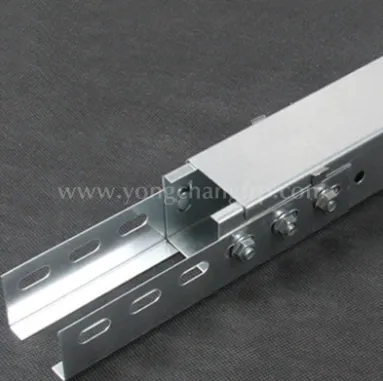
 

Hot Dipped Galvanized Cable Tray


Yong Chang takes honesty as the foundation, cherishes reputation, provides high-quality products, and provides the best after-sales service to repay customers. We sincerely welcome customers from all walks of life to visit our company and contact us with valuable suggestions to obtain ask for the price and parameters of hot-dip galvanized cable tray.

2023年7月24日星期一

What are the Types of Cable Trays?

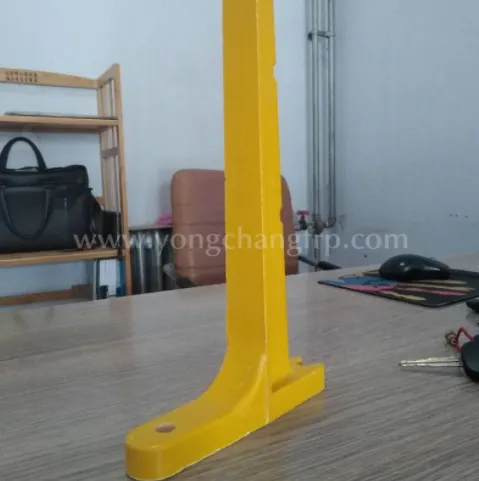
 GRP/FRP Cable Bracket


What are Cable Trays?


Cable trays are used for providing mechanical protection in an environment where large quantities of power control cables are at work. Besides providing mechanical protection, these cables are also designed to facilitate a perfect routing path for power or control cables. These cables could be both overhead and under-ground.

There are a variety of cable trays available in different materials. Cable tray manufacturers make cable trays with galvanized steel, aluminium, stainless steel and glass-fiber reinforced plastic. Making a decision about which cable tray to choose completely depends on the usage and installation environment. Here the installation environment refers to taking into account electrical considerations as well as corrosion. Besides, cost is also an important decisive factor to be taken into account while picking cable trays. Let’s take a look at various types of cable trays:


Types of Cable Trays


1. Steel Cable Trays

Cable tray manufacturers also recommended using steel cable trays. They are highly popular because of several qualities and benefits. Steel cable trays offer exceptionally high strength and are low cost also. The only downside to steel cable trays is their high weight and lesser corrosion resistance. Apart from these cons, these cable trays are really ideal to use in a variety of applications.

2. Aluminium Cable Trays

Cable trays manufactured with aluminium by cable tray manufacturers in India are known as aluminium cable trays. Typically, these cable trays can be used in almost any environment. They have a repute of having a good strength-to-weight ratio and commendable resistance to corrosion. That’s not it. These cable trays are easy to install and are also advantageous because of their light weight. According to fastener manufacturers in India, these cable trays are approximately 50 percent lighter than that of steel cable trays.

3. Stainless Steel Cable Trays

Stainless steel cable trays are also widely used across various industries. They are highly resistant to dyestuffs. Besides, great resistance to organic as well as inorganic chemicals in extremely high temperatures is the hallmark of stainless steel cable trays.

4. Solid Bottom Cable Trays

If you are using sensitive circuits, then solid bottom cable trays are the best pick. These cable trays contain a solid bottom part with a solid cover. For superior EMI or RFI protection, these cable trays must be used. All fastener manufacturers in India recommend the same.

5. Ladder Type Cable Trays

It might surprise you that 80 percent of the cable trays used in any industry is ladder type cable trays. Moisture doesn’t accumulate in this cable tray type.


Hebei Yongchang Composite Material Technology Co., Ltd. is a leading frp cable tray manufacturer in China, with strong technical force, first-class equipment and advanced technology. We main provide glass frp cable tray, steel cable tray, polymer composite cable tray. For any queries about any cable tray types, feel free to get in touch with us. Stay tuned!

2023年7月9日星期日

The Internal Structure of the FRP Storage Tank and Repair Method

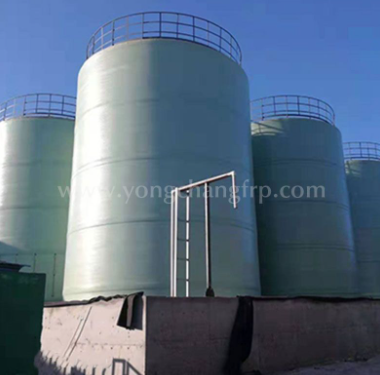
 FRP Storage Tank


Not many people know the internal structure of FRP storage tanks. FRP tank wall is divided into an internal layer, secondary internal layer, and external surface. Next, we introduce these internal structures.


FRP storage tank internal structure

1. FRP tank lining layer

FRP storage tank lining layer consists of the inner surface layer and secondary inner layer, the matrix should be used bisphenol A type unsaturated polyester resin, vinyl ester resin, and other resins with excellent corrosion resistance. Reinforcing materials are glass fiber surface felt, glass fiber short-cut raw silk felt and glass fiber untwisted roving cloth, etc.

2. FRP storage tank secondary inner layer

It is made of general-purpose unsaturated polyester resin as the matrix and glass fiber twist-free roving as the reinforcing material. Resin content is 45%-50%, the thickness of the layer is determined by the design calculation.

3. FRP storage tank outer surface layer

The unsaturated polyester resin with excellent weather resistance is used as the matrix, and the glass fiber surface mat or glass fiber untwisted roving cloth (thickness less than 0.16mm) is used as the reinforcing material, with resin content more than 55%, and the thickness of the layer is 0.2-0.5mm.


Repair of FRP storage tank

Although the FRP performance is superior, in terms of hardness, corrosion prevention is good, but also for one reason or another, resulting in FRP storage tank leakage, and FRP damage, in most cases to replace the main, repair is very difficult, usually with the gluing method or hot welding method to restore it, here is a brief introduction to the gluing method of repair.

(1) cleaning FRP storage tank. First of all, the damaged tank will be disassembled first, clean and dry it, and do the prerequisite work of repair.

(2) according to the size of the broken part cut appropriate large glass fiber cloth, after baking wax removal, heating until not smoking, take care not to fold.

(3) Glue preparation. There are many kinds of glue formulations, but in general, the epoxy resin and polyamide resin two kinds of resin in the ratio of 1:1 into a wide mouth container, stirring with a stick, the viscosity is generally good to lift the stick does not pull the wire, pay attention to the principle of rather less than more, not too much at a time, to just enough to use up as good, followed by uneven mixing, with a good glue after a period of time will be Self-curing, resulting in waste.

(4) Apply glue. First, use a stiff brush to brush a layer of glue in the inner surface of the glass fiber reinforced plastic tank, and then the prepared glass cloth on the surface of the glue, gently pat the pressure to make it fit tightly so that the glue penetrate the glass cloth; the first layer of good penetration and then coated with a second layer of glue, paste the second layer of glass cloth. So the cycle coated a few layers on it, take care not to get too thick in the coating and framing.

(5) Curing. After painting a higher temperature place to let its natural curing, although it takes a longer time, but definitely not with open fire baking. Wait for its natural curing, and then polish the edges, openings, after spraying, the repair is complete, the glass fiber reinforced plastic tank and restore the strong and durable.


We are an FRP storage tank supplier, please feel free to contact us if you need them!

2023年6月24日星期六

FRP Pipes: The Best Choice For Water And Wastewater Treatment

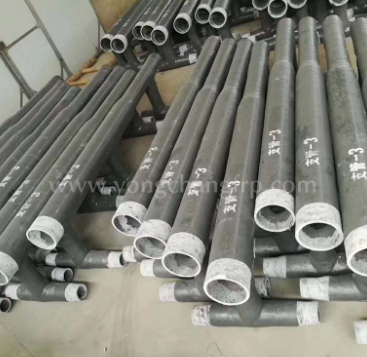
 FRP Pipes


With the aging facilities, federal governments and also districts across the globe face a big task of changing the pipe facilities with the ideal materials providing a life span most likely going beyond 100 years. And also FRP pipes are our finest option to change standard sewage therapy pipes.


Why do we require FRP pipes?


What veins and also arteries are to our body, are water and wastewater pipelines to infrastructure. Think of spending a day without water. From bringing potable to our home to dealing with household and commercial wastewater successfully, these pipes do tasks quintessential to using a hassle-free income.

Over the past 100 years, global water usage has actually increased by an element of 6. With the constant increase in populace, financial advancement, and moving usage patterns, global water usage is growing at a steady rate of 1% annually.

The most usual materials for the manufacture of water and also wastewater pipes are metal (cast iron, ductile iron, steel, and copper), clay and also concrete pipe (glazed clay, strengthened concrete, as well as asbestos concrete), and plastics (PVCs, HDPE, as well as fiberglass).

The most usual pipeline size for water mains varies from 6 to 16 inches. Branch lines giving service to residences, workplaces, and structures vary from 0.5 to 6 inches. Sewers, which lug wastewater and also stormwater have diameters surpassing that of water mains.

For a long, metals as well as concrete have dominated water as well as wastewater applications.


Application of FRP pipes


Picking the right kind of pipe product and also dimension is of critical relevance and also depends upon numerous variables including yet not limited to the application, water pressure, running temperature level, as well as nature of fluid going through the pipe.

While FRP pipes have been in usage for a long, they have actually located a bigger acceptance not long ago, and also have emerged as one of the most popular alternatives to conventional pipelines, such as steel, concrete, and also plastics, in water/wastewater applications.

FRP Piping is majorly made by the filament winding procedure. The filament winding procedure makes use of constant glass hair roaming impregnated with polyester material which is helically wound on a rotating mandrel at a specified winding angle. The roving is wound constantly in bi-directional layers up until the wanted wall surface thickness is accomplished.

While FRP pipes are primarily manufactured utilizing polyester material strengthened with glass fibers, a smaller portion of them additionally utilizes plastic ester and also epoxy depending upon the application demands.

Water/wastewater is a price-sensitive application as well as demands products at a competitive price. Polyester resin has the most affordable expense amongst thermoset materials consisting of plastic ester and also epoxy as well as uses superb chemical as well as corrosion resistance and also moderate mechanical, physical, and also thermal properties.


What makes FRP pipes ideal for water and wastewater applications?


Corrosion Resistance: FRP is an inert product offering excellent rust resistance, high chemical resistance, and also high weathering resistance.

Light Weight: FRP pipelines are extremely lightweight and also have an excellent strength-to-weight proportion. They consider 1/10 of concrete, 1/5 of steel, and also 1/8 of cast-iron pipes.

Longer Life Span: FRP pipes use a longer life span and also toughness with a much-reduced life cycle expense contrasted to steel, iron, and also concrete pipes.

Low Thermal & Electric Conductivity: FRP pipes have outstanding thermal protecting residential or commercial properties and do not need insulation. Besides water/wastewater, FRP pipes are likewise commonly utilized in chemical & industrial, oil & gas, and also marine & overseas applications.

Easy Installation: Being lighter than steel and also concrete, FRP pipelines use a faster setup and need lower installation in addition to upkeep expenses.


We are an FRP pipes supplier, please do not hesitate to contact us if you need them.

2023年6月6日星期二

FRP Cable Tray Provides The Best Solution For Harsh Environments

FRP Cable Tray Provides The Best Solution For Harsh Environments

When designing a cable management system for your new or existing facility, consider using fiberglass cable trays instead of traditional materials. Non-metallic cable trays have excellent protection performance in harsh environments where corrosion resistance and long life are important factors.

There are still many people who believe that steel is more important than competitors. It is true. It is no exaggeration to say that steel is more important than fiberglass. However, fiberglass provides the same strength-to-weight ratio, while the weight is only one-third that of steel. This makes installation easier and lower cost. In addition, this weight saving provides huge life cycle cost savings. In addition to corrosion resistance, fiberglass cable trays are also non-conductive and non-magnetic, thus reducing impact hazards.

FRP cable trays for industrial environment

The fiberglass cable tray is durable. Therefore, they are mainly used in harsh environments that will corrode other materials. This includes marine, industrial, chemical and built environments.

Fiberglass cable tray is designed for the quality and performance of long-distance transportation.

Some companies are building new facilities and need to design their safety features from the ground up, while other customers need to retrofit old facilities to protect their assets in the long-term. A factory may be discovering the potential danger of their old steel trays. Advantages of FRP cable tray

Depending on the application, the advantages of using fiberglass cable trays over steel cable trays are unparalleled. Several key advantages of FRP cable trays include:

Preservative

High Strength

High durability

Lightweight

Flame retardant

Easy to install

Insulation

Non-magnetic

Stainless

Reduce the risk of electric shock

High performance in marine/coastal environments

Available in a variety of resin options and colors

FRP cable tray is also called fiberglass cable tray, and non-metallic cable tray.

FRP Cable Tray

FRP Cable Tray

Switch to fiberglass cable trays

Why switch to fiberglass cable trays? Although the durability of metal trays has lasted for a century, they are still conductive and prone to rust and corrosion. Cable coating technology has evolved to better contain electrical currents, but this does not mean that we should be more tolerant of using what we use to organize the cable itself.

Fiberglass can be used for 25-30 years without deterioration. It is also called "glass wool" and dates back to 1932. It was originally used as a safe, fire-resistant insulating material. The fiberglass as we know it today was actually invented by accident. When trying to weld two pieces of glass together, a stream of compressed air hits the glass piece, turning it into fibers. After years of improvement, this material has also been used for parts of airplanes, cars and boats because of its durability.

The use of fiberglass cable tray system will ensure that your workplace is competitive and safe regardless of working conditions. In addition, they are an investment and will be more durable than most of your equipment, and they can be reused when you are ready to upgrade the equipment.

We are FRP cable tray suppliers. Please feel free to contact us if you are interested in our products.

2023年5月3日星期三

Introducing FRP Pipe

Most plants have worked with engineers to custom design all FRP equipment. Customizing fiberglass pipe or fiberglass pipe systems is a considerable cost and effort, and it is not always necessary. Standard FRP pipe products can meet all requirements.

With simple designation and selection, this fiberglass pipe is ideal for installing new systems or replacing existing pipes.

Customized fiberglass pipe solutions may require thicker corrosion or wear barriers with different resins. In addition, heavier structural laminates and special glass reinforcement can meet installation and temperature requirements.

Save costs

Faster production and faster delivery

Quick and easy selection of fiberglass pipe

Corrosion resistance

FRP is designed to be "user friendly". Resin, glass reinforcement materials and composite structures provide consistent corrosion resistance for most of chemical applications for which FRP pipe are considered suitable. There are still some extreme chemical services for which special structures and alternative resins should be considered.

Durability

The high tensile elongation properties of vinyl ester resin used in pipes impact a superior toughness of the pipeline making it resistant to cracking and cracking of the resin when it is subjected to heavy design loads.

In addition to high fatigue resistance, this toughness also provides a safety factor to resist impact damage during transport and installation.

FRP pipe

FRP pipe

Strengthening materials

All surfaces exposed to corrosive media have "C" glass (chemical grade) veil. FRP used for all subsequent lamination has excellent electrical resistivity, high tensile strength, moderate thermal conductivity and is non-flammable. The basic types of fiberglass materials used; straw mats, woven rovings and continuous yarns, are selected for its physical properties, manufacturing characteristics and chemical resistance of laminate resulting from their use.

Barriers to corrosion

The anti-corrosion layer of the pipe is 100 mils thick and consists of 70% to 80% resin. The high-resin laminated composite material is reinforced by a layer of "C" glass veil followed by two layers of randomly oriented fibers strand mat.

We are FRP pipe suppliers. Please feel free to contact us if you are interested in our products.

2023年4月13日星期四

FRP Cable Tray Provides The Best Solution For Harsh Environments

When designing a cable management system for your new or existing facility, consider using fiberglass cable trays instead of traditional materials. Non-metallic cable trays have excellent protection performance in harsh environments where corrosion resistance and long life are important factors.

There are still many people who believe that steel is more important than competitors. It is true. It is no exaggeration to say that steel is more important than fiberglass. However, fiberglass provides the same strength-to-weight ratio, while the weight is only one-third that of steel. This makes installation easier and lower cost. In addition, this weight saving provides huge life cycle cost savings. In addition to corrosion resistance, fiberglass cable trays are also non-conductive and non-magnetic, thus reducing impact hazards.

FRP cable trays for industrial environment

The fiberglass cable tray is durable. Therefore, they are mainly used in harsh environments that will corrode other materials. This includes marine, industrial, chemical and built environments.

Fiberglass cable tray is designed for the quality and performance of long-distance transportation.

Some companies are building new facilities and need to design their safety features from the ground up, while other customers need to retrofit old facilities to protect their assets in the long-term. A factory may be discovering the potential danger of their old steel trays. Advantages of FRP cable tray

Depending on the application, the advantages of using fiberglass cable trays over steel cable trays are unparalleled. Several key advantages of FRP cable trays include:

Preservative

High Strength

High durability

Lightweight

Flame retardant

Easy to install

Insulation

Non-magnetic

Stainless

Reduce the risk of electric shock

High performance in marine/coastal environments

Available in a variety of resin options and colors

FRP cable tray is also called fiberglass cable tray, and non-metallic cable tray.

FRP Cable Tray

FRP Cable Tray

Switch to fiberglass cable trays

Why switch to fiberglass cable trays? Although the durability of metal trays has lasted for a century, they are still conductive and prone to rust and corrosion. Cable coating technology has evolved to better contain electrical currents, but this does not mean that we should be more tolerant of using what we use to organize the cable itself.

Fiberglass can be used for 25-30 years without deterioration. It is also called "glass wool" and dates back to 1932. It was originally used as a safe, fire-resistant insulating material. The fiberglass as we know it today was actually invented by accident. When trying to weld two pieces of glass together, a stream of compressed air hits the glass piece, turning it into fibers. After years of improvement, this material has also been used for parts of airplanes, cars and boats because of its durability.

The use of fiberglass cable tray system will ensure that your workplace is competitive and safe regardless of working conditions. In addition, they are an investment and will be more durable than most of your equipment, and they can be reused when you are ready to upgrade the equipment.

We are FRP cable tray suppliers. Please feel free to contact us if you are interested in our products.

How to Choose the Right GRP Pipe Fittings for Aggressive Chemical Lines

How to Choose the Right GRP Pipe Fittings for Aggressive Chemical Lines Choosing the right GRP pipe fittings for aggressive chemical lines...