2026年5月26日星期二

What materials are best for industrial tanks depending on the fluid stored?


https://www.yongchangfrp.com/

Choosing the right material for an industrial tank is not a one-size-fits-all decision. The fluid being stored—its chemical makeup, temperature, pressure, and cleanliness requirements—largely determines which material will perform safely and economically over time. Below is a practical, industry-focused breakdown of the most commonly used tank materials and the fluids they are best suited for.


1. Carbon Steel Tanks


Best for: Water, diesel, fuel oil, lubricants, some non-corrosive chemicals


Carbon steel is one of the most widely used materials in industrial tank construction. It offers high strength, good weldability, and relatively low cost.


Advantages:


Excellent mechanical strength


Cost-effective for large volumes


Suitable for atmospheric and low-pressure tanks


Limitations:


Susceptible to corrosion without coatings or linings


Not ideal for aggressive chemicals


Typical applications: Fuel storage tanks, fire water tanks, process water tanks


2. Stainless Steel Tanks


Best for: Food products, pharmaceuticals, corrosive chemicals, high-purity liquids


Stainless steel (such as 304 or 316 grades) is preferred when corrosion resistance, hygiene, or high temperatures are involved.


Advantages:


Excellent corrosion resistance


Easy to clean and sterilize


Long service life


Limitations:


Higher initial cost than carbon steel


Over-specification can increase unnecessary expense


Typical applications: Chemical processing, food and beverage storage, pharmaceutical tanks


3. Fiberglass Reinforced Plastic (FRP) Tanks


Best for: Acids, alkalis, wastewater, salt solutions


FRP tanks are non-metallic and highly resistant to many corrosive fluids.


Advantages:


Outstanding chemical resistance


Lightweight and easy to install


Low maintenance


Limitations:


Lower impact resistance than steel


Limited temperature tolerance compared to metals


Typical applications: Chemical storage, wastewater treatment, industrial effluent tanks


4. Polyethylene (PE) and Plastic Tanks


Best for: Water, mild chemicals, fertilizers, cleaning agents


Plastic tanks—especially HDPE—are commonly used for small to medium storage capacities.


Advantages:


Excellent corrosion resistance


Affordable and easy to handle


Seamless construction reduces leak risk


Limitations:


Limited pressure and temperature resistance


Not suitable for hydrocarbons or solvents


Typical applications: Agricultural chemicals, potable water, chemical dosing tanks


5. Concrete Tanks


Best for: Water, wastewater, slurry, bulk storage


Concrete tanks are often used where very large volumes are required and the fluid is non-aggressive.


Advantages:


Long service life


Suitable for underground or open-top installations


Cost-effective for large capacities


Limitations:


Can crack if not properly designed


May require internal linings for certain fluids


Typical applications: Municipal water storage, sewage treatment plants, industrial effluent systems


6. Alloy and Specialty Metal Tanks


Best for: Highly corrosive or high-temperature fluids


Materials such as Hastelloy, Inconel, or aluminum are used in specialized industries.


Advantages:


Exceptional resistance to extreme conditions


High performance in critical processes


Limitations:


Very high cost


Used only when standard materials fail


Typical applications: Petrochemical, aerospace, advanced chemical processing


Key Factors to Consider Before Selecting a Tank Material


Chemical compatibility with the stored fluid


Operating temperature and pressure


Regulatory and hygiene requirements


Installation environment (indoor, outdoor, underground)


Budget and lifecycle cost, not just upfront price


Final Thought


The “best” material for an industrial tank always depends on what you’re storing and how you’re storing it. A well-matched tank material improves safety, reduces maintenance, and extends service life—making it a critical decision in any industrial storage project.

2024年4月12日星期五

Do You Know The Differences Between GRP And FRP?

The term FRP is often used interchangeably when referring to GRP, a broader generic term more commonly used for engineering materials used in a wide range of industrial applications. The term FRP is often used interchangeably when referring to GRP.


What is GRP?


GRP stands for Glass Reinforced Plastics. It is also known as glass fiber, composite plastic, or FRP.  The polymer is usually the epoxy, polyester, or the vinyl. It is strong, extremely light, and versatile. the behavior of GRP is different from that of traditional thermoplastics used in everyday products. This means that it has properties that can be used in a range of applications in many industries. Fibreglass materials are commonly used in high performance leisure aircrafts and gliders, boats, automobiles, bathtubs, hot tubs, water tanks, roofing products, pipes, cladding, cast, Surfboards, and external door skins.

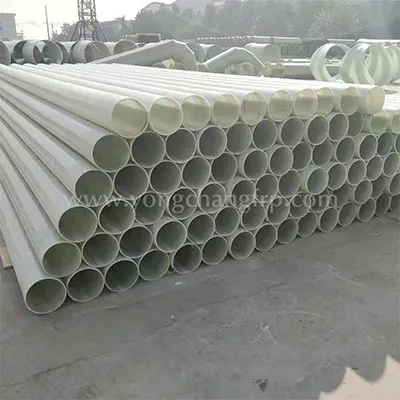
FRP pipes

What is FRP?


FRP stands for Fiber Reinforced Polymer. FRP is a composite material formed from a polymer matrix reinforced with fibers. While the fibers used are usually glass fibers, such as GRP, other fibers such as carbon, aramid, or basalt are also used.

Fibre reinforced polymers are made of two primary constituents; fibres and a polymer matrix. In FRP, the fibre is embedded in a polymer matrix. This structure gives completely different chemical and physical properties than the properties of the individual materials. In fact, these materials satisfy higher engineering requirements than the ordinary materials. Hence composites are applied in less sophisticated to very sophisticate and demanding manufacturing tasks. Mechanical, civil, biomedical, marine, and the aerospace industries are main users of composite materials.

The primary role of fibres is to provide strength and stiffness to the material. But the fibre alone is brittle (ex: glass). Therefore, the fibres are encased in a coating of polymer materials. Polymer matrix holds the fibres in their position and transfers the loads between the fibres. It also contributes to the inter-laminar shear strength.

The fibres used in composite are as follows; E-glass, S-glass, Quartz, Aramid (Kevlar 49), Spectra 1000, Carbon (AS4), Carbon (IM-7), Graphite (P-100), and Boron. Polyesters, Vinyl Esters, Epoxies, Bismaleimides, Polyimides, and Phenolics are the polymers used. Each polymer has different chemical and physical properties; therefore, contribute differently to the composite structure. As a result, the composite properties are also different based on the polymer.

Polyester and vinyl are low cost materials, hence used extensively in commercial applications. Epoxies are used for high performance continuous fibre matrices. It also performs better than vinyl and polyester in high temperature conditions. Bismaleimides and Polyimides are high temperature resin matrices for use in temperature critical engineering applications. Phenolics are high temperature resin systems with a good smoke and fire resistance; therefore, used in aircraft interiors.


What is the difference between FRP and GRP?

• FRP is a composite material, where high strength fibres are included in a polymer matrix. They are used in many commercial and engineering applications due to their high strength and light weight. FRP is widely used as a substitute for metal and wood. Best example is the use of carbon fibre reinforced polymer (CFRP) instead of aluminum and titanium or high grade steel in aircrafts.

• Fibreglass or GRP is a composite material made out of glass fibres and uses polyester, vinyl, or epoxy as the polymer. It is used to make gliders, boats, and bathtubs. Fibreglass is used mainly for commercial applications. Fibre glass is one type of FRP.


What is Fiber Reinforced Plastics used for?


GRP is used in a range of different applications. In many industries, products made partially or completely from GRP are useful. For example:

1. Non-slip protection for refurbishing wet and dry floors

2. Handrails

3. Sports equipment such as kayaks

4. Electronic enclosures

5. Safety grating for industrial and public areas

6. Helicopter rotor blades and wind turbine blades

7. Water pipes or drain covers


FRP pipes


What are the properties of Fiber Reinforced Plastics?


GRP has many valuable properties that make it very useful in industries around the world. These properties include

Thermal insulation

FRP has a low thermal conductivity of 1.25 to 1.67 kJ/(mhK) at room temperature, 1/100 to 1/1000 that of metal, making it an excellent thermal insulation material. In the case of transient ultra-high temperature, it is an ideal material for thermal protection and ablation resistance and can protect the spacecraft to withstand the high-speed airflow above 2000℃.

High strength to weight ratio

The relative density is between 1.5~2.0, only 1/4~1/5 of carbon steel, but the tensile strength is close to or even exceeds that of carbon steel, and the specific strength can be compared with that of advanced alloy steel.

Corrosion resistance

FRP is a good corrosion-resistant material, with good resistance to the atmosphere, water, and general concentration of acids, alkalis, salts, as well as a variety of oils and solvents. It has been applied to all aspects of chemical corrosion resistance and is replacing carbon steel, stainless steel, wood, non-ferrous metals, etc.

Good electrical properties

It is an excellent insulating material, used to make insulators. Good dielectric properties can still be protected under high frequency. Good microwave permeability has been widely used in radar radome. Good heat and sound insulation effect.

Easy to mold

① The molding process can be flexibly selected according to the shape, technical requirements, usage, and quantity of the product.

② The process is simple and can be molded in one go, with outstanding economic effects, especially for products with complex shapes and small quantities that are not easy to mold, highlighting its process superiority.


What are the production methods of Fiber Reinforced Plastics?


Basically, there are two major categories, namely wet contact molding and dry pressurized molding. If we divide by process characteristics, there are hand paste molding, RTM method, lamination molding, molding, extrusion and pulling method, winding molding, etc. Hand- glued molding includes a bag-pressing method, hand-gluing method, a spraying method, wet-gluing low-pressure method, and mold-free hand-gluing method.


We are an FRP pipes manufacturer, please feel free to contact us if you need them.

2024年3月19日星期二

How FRP Pipe is Constructed?

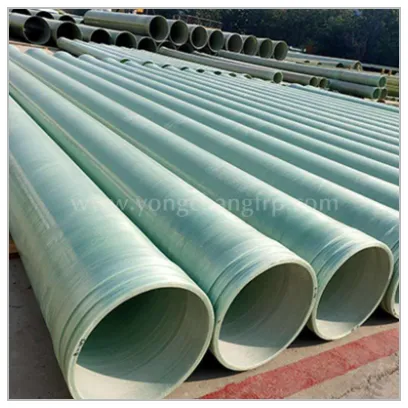
 FRP Pipes


Three different processes are commonly used to fabricate fiber reinforced plastic pipe: centrifugal casting, filament winding, and hand lay-up. Filament winding and centrifugal casting are used to make pipe up to approximately 12 inches in diameter, with filament winding being the most common. Hand lay-up is generally used for larger diameter pipes, and for asymmetric shapes.


Centrifugal Casting

The centrifugal casting process involves layering glass cloth on the inside walls of a tubular mold which is rotated at high speed. Catalyzed liquid resin is then injected into the rotating mold. Centrifugal force ensures that the reinforcing fibers are thoroughly saturated with resin and serves to drive out air bubbles that might compromise the physical properties of the pipe. The mold continues to rotate while the resin cures.


Filament Winding

In filament winding, continuous fiberglass filaments, called rovings, are saturated with catalyzed liquid resin and helically wound around polished steel mandrels. Typically, the fibers are fed through a mechanical device that moves up and down the length of the rotating mandrels. The resin is then cured at elevated temperatures and the finished pipe is removed from the mandrel.

Filament winding results in the highest fiber-to-resin ratio of the three fabrication methods and consequently offers the highest strength-to-weight ratio. This is the method used by Waco Boom.


FRP Sand Pipe


Hand Lay-up

As the name suggests, hand lay-up is a manual fabrication process. It involves building up layers of chopped glass or woven glass mat impregnated with catalyzed resin around a suitable mold. Special metal rollers are used to improve glass wet-out and force out trapped air bubbles. Hand lay-up is generally used only for custom shapes or for large-diameter pipe where filament winding or centrifugal casting is not practical.


FRP Pipe Manufacturer & Supplier

Our Yongchang glass fiber reinforced plastic / FRP pipes are designed and manufactured according to customer requirements, with various sizes and configurations. We can manufacture pipelines of any specification and pressure and can be made into composite pipelines such as PVC/FRP, PP/FRP, PVDF/FRP, etc., according to the conditions of use. If you are interested in our products, please contact us for more information.

2024年3月5日星期二

Why Do You Need The FRP Pipe?

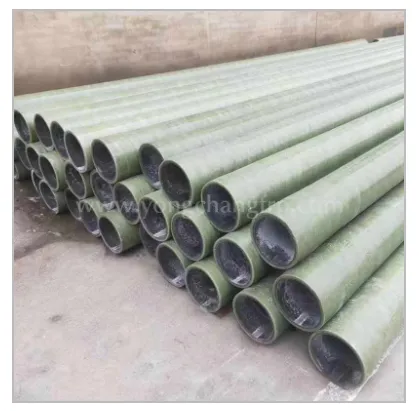
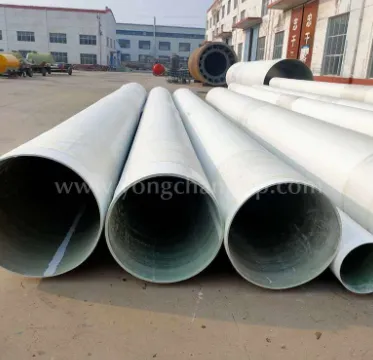
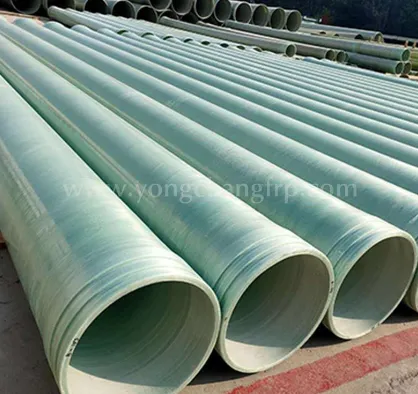
FRP pipe, also called fiberglass reinforced pipe, is a light, high-strength, and corrosion-resistant non-metallic pipe. With its excellent chemical resistance, light weight, high strength, non-scaling, strong shock resistance, long service life compared with ordinary steel pipes and cast iron piping, low overall cost, fast installation, safe and reliable, it is accepted by users. The application fields of fiberglass reinforced pipe involve industries such as petroleum, chemical industry, and sample water.


What is FRP (GRP)?


FRP Pipe


FRP, another name for GRP, is commonly known as glass reinforced plastic. It is a high performance material formed by mixing fiber material and base material in a certain ratio, which is light and hard, non-conductive, high mechanical strength, and corrosion resistant.


What are the characteristics of FRP Pipe?

► 1. The coefficient of development of products is comparable

The coefficient of thermal expansion of the FRP composite product resembles that of concrete. When the ambient temperature level changes, FRP and concrete work in harmony, and also no big temperature level anxiety will certainly be created between them.

► 2. High tensile stamina

The tensile stamina of FRP is considerably more than that of steel, and also the tensile toughness of high-strength steel wire has to do with the exact same, usually 2 to 10 times that of steel.

► 3. Lightweight

FRP product is lightweight and also high toughness, so it can reduce the weight of the framework as well as assist in the construction. Its weight is normally 20% of steel. When it is utilized in a huge span structure, it can substantially lower the weight of the structure.


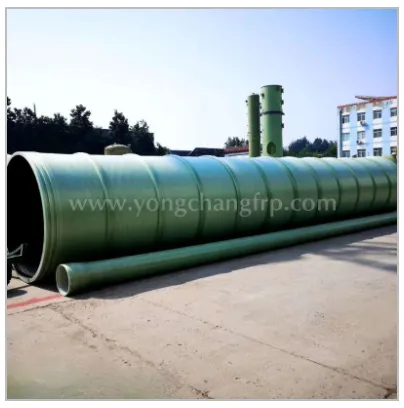
GRP/FRP Sand Pipe


► 4. Manufacturing facility production, assembly, and also building

FRP is a fabricated product, which can be made with different toughness indexes, elastic modulus as well as unique efficiency requirements according to the job requirements, such as fiber material of various fiber materials and laying techniques. Factory manufacturing and also on-site installation contribute to making certain tasks top quality, boosting labor efficiency as well as understanding construction automation.

► 5. Rust resistance

FRP material has great corrosion resistance and exhaustion resistance. It can be used in acid, antacids, chlorine salt as well as a moist environment for a long period of time. Thus, the life span of the structure can be boosted. This is hard to compare to the general structure products.

► 6. Practical forming

The manufacturing procedure of FRP consists of pultrusion, winding, hand gluing, injection molding, and also various other techniques. It is not only possible to produce normal shaped FRP products widespread, but likewise to generate nearly approximate designed sheets for creating non-linear structure forms.


We are an FRP pipe supplier, please feel free to contact us if you need them.

2024年2月6日星期二

What Are The Benefits Of Using FRP Pipes?

What Are The Benefits Of Using FRP Pipes?

Fiberglass reinforced plastic (FRP) pipes are used in various industrial product applications, including the handling of materials in corrosive environments and also the transfer of corrosive products and materials. However, the fastest growing application of FRP systems is for industrial equipment. The applications of FRP pipes range from handling flammable liquids in retail facilities to water and sewage pipes in industrial and municipal markets.


Advantages of FRP pipes


1. Corrosion resistance

FRP pipe has corrosion resistance. In most cases, Fiberglass reinforced plastics are the only material that can handle some service environments. In addition, their corrosion resistance is often combined with their cost advantage, making it the most acceptable solution. The corrosion resistance of the Fiberglass reinforced plastic pipe is a function of the total resin content and the resin used in the laminated pipe. Therefore, the higher the resin content, the stronger the corrosion resistance.


2. Weight advantage

FRP pipe has a lower weight-to-strength ratio, which is another significant advantage of FRP pipe. In the case of the same strength, the weight of Fiberglass reinforced plastic pipe is about half that of aluminum and one-seventh of stainless steel.

When considering the convenience and cost of piping system installation, lightweight performance is particularly important. When equipment is installed on existing structures such as roofs or mezzanine, the inherent lightness of FRP pipes is a major advantage.

The high strength of FRP pipe plays an important role in the design of various FRP equipment and applications such as pultruded profiles. In addition, the high strength and light weight of FRP pipe make it suitable for filament wound pipes and pipes. Contact us about our products.


3. Economy

Low cost is a major advantage of using FRP pipes because they provide an effective corrosion solution at the lowest cost when compared to materials such as titanium, rubber lining and stainless steel. However, the cost advantage of this material mainly depends on design considerations, applications, pressures involved, availability, raw material costs, and product configuration.


FRP Pipes

FRP pipe


4. Flexibility

FRP pipes have a wide range of uses and are often overlooked in their applications. However, it is important to note that the things you can do with Fiberglass reinforced plastic pipes cannot be done efficiently and economically with other ready available materials. FRP pipes can be used to shape any piece of equipment or configuration for which permanent or temporary molds can be constructed. For example, the work of FRP pipes is very easy, because you can manufacture all types of T-shaped inlets, rectangular transitions, round transitions, elbows and flanges with minimal cost. Fiberglass reinforced plastic pipes can also be used in new and existing structures.

We are FRP pipe suppliers. Please feel free to contact us if you are interested in our products.

2024年1月17日星期三

FRP: Manufacturing and Advantages

 FRP pipes

GRP/FRP Sand Pipe


FRP is a very beneficial building material. Many industries turn to FRP products once they realize the long-term financial savings.


How is FRP made?


FRP is a composite material that consists of a thermosetting resin matrix reinforced with fibers. In the early days of FRP, there were even some reinforcements made from paper, asbestos or wood. This is now obsolete due to its poor durability compared to carbon and glass.

Today, FRP can be purchased in a variety of compositions with different resins and fibers. The greater the amount of fibers, the stronger the FRP. Depending on the application, there are many different types of resins used to make FRP. These plastic resins can include:

• Polyurethanes

• Epoxy resins

• Polyester fibers

• Phenolic formaldehyde

• Vinyl esters


What are the advantages of FRP? 


Advantages of FRP features

• The fiber reinforcement adds elasticity and strength to a tough but still relatively fragile substrate. This allows it to be turned into a variety of complex structural shapes and platforms or sheets for a variety of applications.

• Fiber-reinforced plastics are incredibly strong and exceptionally durable. And they are super resistant to impact and denting.

• They can also handle climates and environments of the harshest nature, especially corrosive environments such as oil rigs.

• It can be as strong as steel at a fraction of its weight.


FRP pipes

GRP/FRP Sand Pipe


Advantages of FRP structure

• FRP products offer the same strength but also improved flexibility, durability, and resilience.

• Because of the strength of fiber-reinforced plastic relative to other materials, ordinary polymers, thermoplastics, and other materials, and even metals such as aluminum and steel, cannot match it.

• It is a fraction of the weight of its traditional counterparts.

• Its elasticity and strength can even be scaled to suit your needs. This makes FRP a highly adaptable material that can be easily used in many different applications in many industries.

• Shapes can be either contoured or rounded and can be provided with tight tolerances and uniform thicknesses. FRP can be manufactured into vastly complex designs using several combinations of geometric shapes.

• The thickness of the material can be adjusted from as little as 1/16" to 1/2" if desired.


We are an FRP pipe supplier, please feel free to contact us if you need them.

2023年12月11日星期一

Know about FRP Biogas Desulfurization Tower

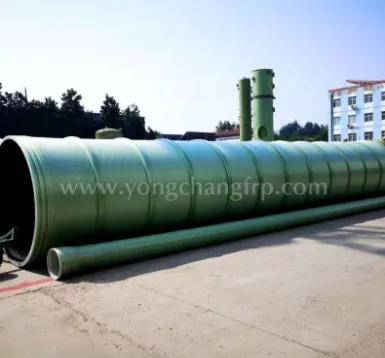
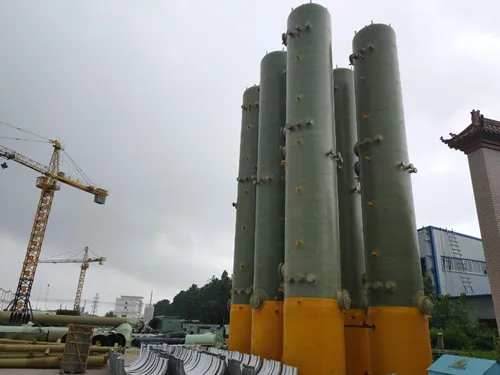
 GRP/FRP Biogas Desulfurization Scrubber


Large and medium-sized biogas engineering technology is an energy engineering technology aimed at the development and utilization of organic wastes such as farm manure and kitchen waste, aiming at obtaining energy and controlling environmental pollution, and realizing a virtuous cycle of agricultural ecology. It mainly reduces the organic matter content of fecal water and waste through anaerobic fermentation and related treatment, Meet or approach the discharge standard and obtain biogas according to the technical design process requirements of the main body of anaerobic fermentation and supporting projects.

Biogas contains hydrogen sulfide gas, which must be desulfurized before combustion. In this biogas purification project, biogas treatment process steps: FRP aeration tank > FRP biogas desulfurization tower > FRP biogas washing tower。

Desulfurization process of desulfurization tower: the biogas from anaerobic biogas digester enters the desulfurization system after preliminary dehydration. Hydrogen sulfide gas contacts with desulfurizer and is removed from biogas due to redox reaction. The desulfurization system can provide the best temperature and water gas content for the desulfurization reaction. The loading process of desulfurizer can also provide the best air flow channel and effective contact area of gas-solid reaction for the desulfurization process, which can greatly improve the utilization efficiency of desulfurizer and the purification degree of biogas.


Dehydration, impurity removal and buffer process

The pressurized biogas enters the buffer tank to realize the effective separation of gas, liquid and solid. At the same time, the gas pressure stabilization treatment is carried out to meet the stable gas supply to the generator set and ensure the safe and efficient operation of the generator set. The separated water and particles settle to the bottom of the buffer tank through the action of gravity, and the impurity gas partially dissolved in the water is discharged from the bottom of the buffer tank with the water. The purified gas comes out from the top.

How to Choose the Right GRP Pipe Fittings for Aggressive Chemical Lines

How to Choose the Right GRP Pipe Fittings for Aggressive Chemical Lines Choosing the right GRP pipe fittings for aggressive chemical lines...